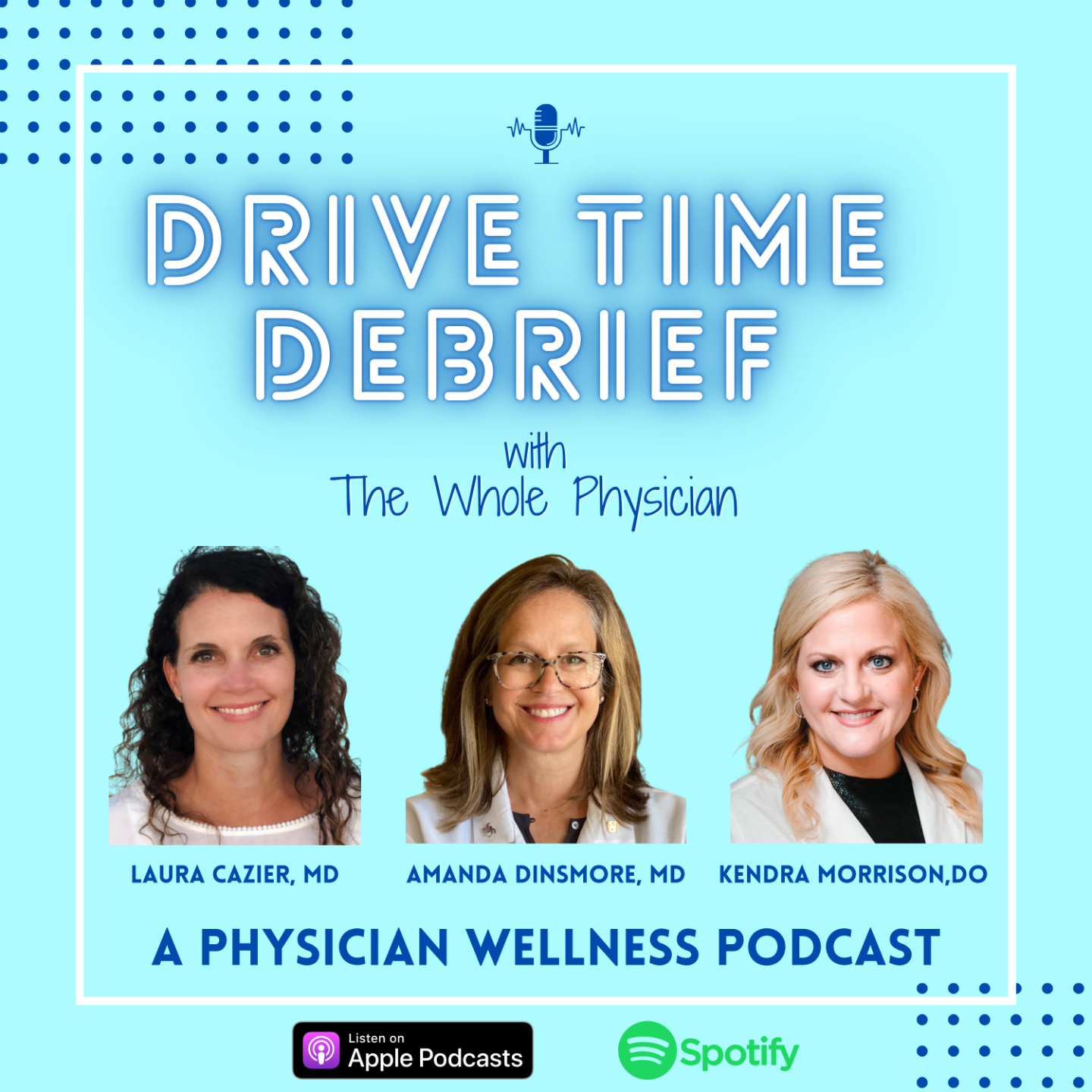
Hey guys. Welcome back to the podcast. I'm Amanda. I'm Laura. And I'm Kendra. And today on Drive Time Debrief, we have a very special guest. You probably know her best online as Paging Dr. Fran. Dr. Fran is a board-certified OB-GYN, residency faculty member, hospital medical director, and one of the most recognizable physician educators on social media. Through platforms like Instagram and TikTok, she reaches over a million followers.
Translating complex medical topics into clear, evidence-based information and tackling a huge wave of misinformation circulating online — you must be exhausted because there is a lot of it. Thank you so much for having me. Yeah. So she originally started posting in 2021 after noticing how much inaccurate information about pregnancy, contraception, and women's health was spreading online, and realizing physicians couldn't afford to stay silent anymore in those spaces.
And since then, her work has expanded beyond education and advocacy and physician representation online, helping amplify credible medical voices in an era where algorithms often reward the loudest voice rather than the most accurate one. So today we're going to talk about practicing medicine in the algorithm era, and how misinformation affects physician-patient relationships and what that means for physician wellness when your clinical expertise is constantly being challenged by TikTok.
Dr. Fran, welcome to Drive Time Debrief. Thank you for having me. This is wonderful. I am extremely excited. I've been following you. I'm excited because your dad's an ER doc, so that's exciting. Yes, he is. So welcome to the neighborhood of the burned out EM docs with sarcasm and dark humor.
I've known it my whole life. Okay, so this is family. This is just family.
Well, we'll start with talking about your origin story. You said you started posting because you were seeing so much misinformation online and, for the physicians listening, I know that a lot of us feel so frustrated — especially this is my pain point, it's coming out in my testimony right now — that the patient comes in and they're really convinced that what they heard on TikTok or Instagram or something like that is the die-hard truth and they're willing to go to blows for it. I'm not sure who's convincing who at some point, but what was the moment when you realized physicians actually need to be present in these online spaces instead of just being annoyed by them? So in 2021, I had just graduated from residency and I took six months off to be home with my children. It was still COVID times, I was spending a lot of time on my phone scrolling on TikTok and I was at home with my small children and I was breastfeeding one day and I came across this video of this other woman who was a pumping mom and she was on a bachelorette party and she was filming herself pumping and dumping her milk.
And I, as a breastfeeding mom who also had a lot of interest in lactation medicine, was like, oh my God, you don't have to pump and dump after having a drink. Like you should go to the clubs with your girlfriends. And I was like, well, I'm finally at a place where I feel like I can talk about these things online.
I had been a blogger during my medical school years, but it was always about myself. It was never about medicine. And so now I was in a place where I had finished my residency and I had the knowledge to talk about it, as well as the history of making content. So I was like, oh, I'm just going to make a video about this because I want this poor woman to know that she doesn't have to pump and dump. And then I just enjoyed the process of making videos and talking about medicine and being a mom of young children, and those things. And the more time I spent on my phone watching videos and making videos, the more the algorithm would show me these incorrect videos. And so I just really continued to do that and really started to see how important it was to have a credible voice — to have someone say, I am a board-certified OB-GYN, I'm giving you the data, I'm showing you the studies and making it easy to digest for the lay public.
And that's really kind of how I started, and not much has changed in those years. You know, I continue to do the same thing. I keep seeing videos that just come across my FYP and I'm like, I have to address this. And sometimes it's disinformation, right? Sometimes it's people purposely putting out misinformation. And I think they're very good at creating that type of content. And a lot of it is just misinformation — people misunderstanding things or not really understanding all of it. Or they've heard one thing and now they're continuing to talk about it as if that's the truth. And so it's kind of a combination of helping people who are just talking about their health things or asking questions online, and also addressing the people who are very purposely, in a way, poisoning the minds of our patients with disinformation.
Yeah, I love that, because it is exactly that. You do have great content out there. There are some honest voices out there that have data and intellect behind them, but then you have those malignant people and the ones that do create a lot of confusion. And so I think one of the things that I have learned is just showing up, accepting that those people are just looking for information and unfortunately these days we have it in our hands 24/7. We can click on anything and get any information. And realizing how easily accessible it is to get any information is really important. Yeah, I mean, I think what I've really thought about over these years is, how did we get to this point with patients? And I think a lot of it stems from COVID in a way, right? People kind of realized that medicine is not this perfect science, that it is the art of medicine. We're always figuring out new things, but at the same time, the systems that we work in have really put a divide between us and our patients. We don't have nearly as much time with our own patients as we'd like, especially for those of us who work in offices, where we have very scheduled visits — like, I have 10 minutes with you and that's all I get. And so because our patients really are desperate for more time and education that we don't have to give them, they go online to the people who are willing to give it to them, for good or for bad.
Yeah, and on that point, patients are learning more about health, health topics, medicine, and disease states from social media, and they usually Google their symptoms, right? So then that takes them down the next rabbit hole. So even before they show up at your office or in the ER, they are researching things, they're looking up things, they hear something. And so how can doctors really show up and rebuild that trust in the exam room with only 10 minutes to do it? Wow. I mean, I think the first thing you do is just acknowledge them and say, I hear you, I'm so glad that you are interested and want to learn more about your condition, right? You really want to show that you're on the same team. You're not there to fight them on that, but you may be there to point out why what they saw doesn't actually apply to them. So for me, I see this a lot in obstetrics where patients see a lot about low-risk births and low-intervention pregnancies and those kinds of things. But then I have to take that to my patients and say, I understand you saw these things for low-risk pregnancies, but you yourself are not a low-risk pregnancy, and so let's talk about what you liked about that and how we can apply some of the same principles or incorporate parts of that and make it applicable to you. So I think the most important thing that any clinician listening can do is just not immediately dismiss them, because your patient is interested in their health, right? Like, we should be commending them for trying to educate themselves as best they can. If you immediately dismiss them, that's the end of that relationship, right? So hear what they have to say and then see how you can apply what they learned to their specific situation.
And sometimes you have to say, that doesn't apply to you and here is why. And that's where you — and you know, it's 30 seconds — it's 30 seconds to say, this doesn't apply to you because you don't have this condition, or you're on these medications, or we did this testing and you don't actually have this, and here's why. And then your patients feel heard and they feel they understand their condition better. That's a big point — just them leaving feeling heard. And that could be just reflecting back what you just said. Yeah, I know you saw this or heard this — meeting them where they're at — and then saying, but in your case... And I think that not only builds trust, but it also lets them leave saying, okay, so now I have an understanding — even though this looked attractive or this seemed like it might work, maybe I'll have to make an alternative birth plan, or whatever applies in your case. And I also think that it will allow them to be more compliant. They'll come back the next time and be like, okay, now that I know this, and they'll feel like they had a hand in making the plan or deciding. And I think that also breeds that collaborative spirit that will again deepen that trust and that relationship. Yeah, I mean, really our patients just want to be heard and they want to understand what's going on. And so it's a little bit on us to keep that relationship open, even though we want to pull back, right? We want to be like, that is the most crazy thing I've ever heard — absolutely not. But that is not going to help the patient-physician relationship. And so keeping it open, especially in the beginning, so that you have the room to get into why that doesn't apply to them, and just having those 10 extra seconds to say, I hear that you are interested in this — this doesn't apply to you for this reason. Or, I hear you think you might have this — the testing we did shows that you do not. But I want to continue to work with you, or let's find a different approach, or let's pivot a little to make it all work. So just staying open to them is going to benefit you more in the long run than immediately being like, nah, that's crazy, and the internet tells you the dumbest things. That's not going to make someone want to talk to you more. Yeah, exactly.
So when do you think the emotional toll of misinformation — or constantly having these conversations and battling the things that patients come in with (I say "battle" loosely, but it is a constant conversation) — when do you think it becomes a physician wellness issue and really contributes to some of our moral injury and burnout? Oh my God, all the time. Like from day one, right? Like you can have those patients in your office back to back to back. You know, my husband's a family med doc and he doesn't spend any time on social media — he doesn't even have a Facebook, like nothing. But he's like, so is ADHD trending on TikTok right now? Because I've had to discuss it 14 times today. You know, those kinds of things. And so I think for everyone, especially early on, it's hard to remain empathetic and patient and all those things. So for all of us, and especially currently in the current political climate, and that trickles all the way to the internet and that trickles into our exam room — I'm sure everyone feels a little tired, understandably so. Yeah. Yeah, I really appreciate that you're highlighting the need to not dismiss their concerns wholesale, because the reality is — and you trained after we did, I hope things were better for you — definitely being dismissed was something that we swam in constantly, and to have to shift ourselves from being like, no, that's ridiculous, requires a real intention, because that's not how we were trained. We were told stuff was ridiculous.
Right? Yeah. I mean, it's hard. You go through a lot of training to become a physician and if you haven't gone through it, you have no idea how hard this whole process is, right? And that hardens you a lot. It takes a lot to have to work 24- or 36-hour shifts, even as attendings now. That life hardens you, and so when people come in with something that you feel is not as hard as the things you've gone through, it's hard. I remember when — so I had two of my pregnancies during residency, right? So there I am, 38 weeks, hour 23 of my 24-hour shift, I am miserable. I was throwing up every day. I'm a second-year resident. People would come into triage and say, I'm 20 weeks, and yeah, I'm just really tired and I think I want to be out of work for the rest of my pregnancy. And I was like, are you kidding me? You know? So it hardens you because we've all had to do really hard things, but we chose to do this and we chose not to put what we've had to go through onto our patients. And our patients are there for our help. You have to continue to remind yourself of that, despite how hard you worked and how hard your life was in some ways. That doesn't count when the patient's there to seek your medical advice.
Yeah. I think you gave some examples of good phrases to use when someone comes in with, "Well, I saw online that..." — do you have any other productive ways to respond in that moment without damaging the relationship or dismissing them? I mean, you can just ask them if you can watch it together, right? If someone's like, I saw this video and I think I might have that — just say, well, let's see. Watch it together quickly and see how they present it and if it applies to you and what they recommend, right? Like, sometimes they have it pulled up because they want you to hear it. And so I think, again, it's a way to show that you're open — and especially if it's something new, right? Because studies come out all the time and people will make videos about them. So for example, I make videos about new studies that have come out, and I can imagine that one of your patients saw that Dr. Fran made a video saying that if you have recurrent BV, you should get your male partner treated. This might be news to some of you, because it is new, and you may not work in the field that I do, but you work in the urgent care and they show up and say, well, I saw online that you can treat the male partner. And that might sound crazy to you until they show you the video of Dr. Fran, the board-certified OB-GYN, showing you the New England Journal of Medicine article showing how helpful it was. So sometimes, especially if they say, oh, I saw this study, or a doctor was talking about this, you can just ask them, let's look at it together, because it might be real. It might not just be a chiropractor making something up. So I think even just asking them to see it might be helpful. Oh yeah. I love that. I love that, because I learn stuff from my patients all the time. Yeah. So I love that.
Women's health in particular seems like a hotspot for viral misinformation — unless I'm wrong, but I think that's true. No, you're right. That's true. You're right. Like birth control, hormones, fertility, pregnancy. Why do you think that is? Oh my gosh, this is so multifactorial. First of all, our field is heavily politicized, right? Politics probably gets more involved with our health, the medicine that we practice, more than any other field. And so it comes from the top down. We have whole laws that change all those things, right? That trickles down. The field of, especially, pregnancy and preventing pregnancy or not being pregnant has a lot of religious undertones associated with it. So there are a lot of people who have opinions like, you shouldn't prevent pregnancy. If you have a pregnancy, you shouldn't ever end it. Right? So there's that aspect. Obstetrics and women's health as a whole has been very, very underfunded. That is not just my opinion — that is a fact. And so we just don't have the studies. We don't have the medications, we don't have the surgeries, we don't have the prevention tools that many other fields of medicine have. You know, my strongest example is that PCOS affects 20% of women and we don't have a single medication that was made specifically for PCOS. Can you imagine any other diagnosis that 20% of the population has with nothing made just for that? We have to use every other medication to try to piece together any sort of quality care. So now think about the 20% of women who have this condition whose doctors say, I really don't have much to offer you. Right? Luckily now we have GLP-1s and those can help with some things, but still not specifically for PCOS, and you can apply that to every other medical condition that affects gynecology.
And then on top of that, when you think about physicians and the work of OB-GYNs specifically — these doctors, and many who are probably listening, practice 24 hours a day, seven days a week. How tired can you be? And we're expected to do so much and be so great at everything. You have to be the best endometriosis surgeon. You have to be the best high-risk obstetrician. You have to be a menopause expert. You have to be able to do all your pap smears and all of the surgeries. It goes on and on and on. And that's a lot of things to be the most expert in. No one can be the best at every single thing, but historically we were expected to. And so it's all these things that make tired doctors who don't have enough information, who don't have ways to help people. And the field that we work in is very intimate, right? Vulvas and vaginas — that is a very private space for people. And so any work that has to be done there, especially if it's painful, or if it's related to your own history of assault or whatever, that is more traumatic. So there are just so many reasons — some our fault and some not our fault — for why things online get to where they are. Patients feel dismissed. And then something hurts and we didn't do a good job preventing that hurt or taking them seriously when they said it hurt. And those are the videos that go viral. And I mean, obviously I've thought a lot about this — there are many reasons why women's health online becomes such a hot-button topic and why the videos go so viral. And it's always the same videos, right? It's the videos that are saying things that sound plausible. There was one recently that went very viral, that a bunch of people recreated: isn't it a coincidence that we were all put on birth control in our teens and now everyone has to go through IVF? It's like, yeah, that is a coincidence. The only reason that's happening is because you were put on birth control and got to delay your fertility until you were ready to have a baby at 35. And now it turns out it's harder to have a baby at 35 than it was at 17. It's not because of the birth control itself — it's because of the choice you made to delay your fertility, which, same here, but those videos go viral because they make people feel like, oh yeah, this conspiracy I've always thought was true is so true. And everyone, you know, it just is a continuation of that. Yeah. Wow. That's a lot. Preach it. Preach it.
So tell us also about your resources to combat this misinformation on your website, pagingdrfran.com. Should more doctors consider making resources like that? Oh my gosh, yes. I mean, for people who have ever considered content creation, creating some sort of resource for patients is the reason I gained a lot of my following. You know, my TikTok tool list that I created back in 2022 is the reason I went from about 7,000 followers to a hundred thousand followers in a month. I created something that patients were looking for — patients were looking for doctors who would sterilize them no matter how old they were, if they had children or were married. And that grew very quickly because there was such a need for it. And all of that came out organically. I also have an elective induction fact sheet because I was sharing that I was choosing to be electively induced and so many people had questions about it. And so I put together something that highlights the data — what studies are out there on elective inductions, what should you ask your doctor before you choose to be electively induced. Because patients were asking, I don't even know if I should do this. I'm like, here's a list of questions you should ask your doctor and see if you're making a truly informed choice. Because again, we only have 10 minutes in the office. I can't spend all that time talking about elective inductions other than giving you the quick highlights, because I have 14 more patients to go. That's not fair to the patient. They wanted information. And so I wanted to create something that was evidence-based — here are the studies, here's the synopsis of the studies, here's the link to the study so you can read it yourself, and then here's something you can take to your own doctor and talk about and see how it applies to you. And so, yeah, I mean, you know, I'm sure many people listening have dot phrases that they put in their after-visit summaries. This is really no different — it's just making it more accessible to other people and not just your patient in front of you. That's so brilliant.
So one more question here. Historically, medicine has not always been very supportive of physicians building public platforms. Do you think medicine is evolving in how it views physicians who are educators or creators outside the hospital? I mean, I think so. I think there's been such an explosion — and maybe this is just my feed showing me what I've already been seeing — but I see so many new physicians popping up and making content and I'm constantly trying to reshare their stuff, because I want more people to do it. I think people really do understand how important it is to have credible voices online, because we all see the misinformation in our clinical work, right? And so for someone to want to put themselves out there and really tackle that — I think if anyone is in a leadership position, I hope you really support your physicians doing this. I am so thankful that my own chair has always been very supportive of me. And you know, when you get to a certain number of followers — even maybe just with a hundred followers — someone could take offense to it and try to get you in trouble. And the reality is that has happened to me. I am just so thankful that my boss has always been very supportive of me. My hospital system has been very supportive of me, and they've received a lot of new patients because of me. And so that's the other thing to recognize, right? A lot of patients want to know their doctor. They want that kind of familiarity with their physicians — patients know what they're getting with me, they know who I am because they've seen my videos and they know what I stand for. And so, if nothing else from a business standpoint, it's smart, but from an education standpoint and in terms of making our patients trust us more — we need more doctors of any specialty talking about the medicine that they practice and the work that they do, and addressing the misinformation when possible, because our patients are seeking it out and we really need to be filling those holes rather than letting naturopaths just say whatever they want.
Amen. For sure. And you've encouraged physicians to be more active online in order to combat that misinformation, but I'm already imagining some physicians like, I can't do one more thing. Do you think participating online is becoming part of the job responsibility for physicians, or is that asking too much for a profession that's already burned out?
Yeah, I mean, I would never say every single one of you has to be on TikTok, right. I think there are ways that you can educate that aren't in video form. You don't always have to make TikToks — you can go on Instagram and just make carousels of pictures. You can write a blog, you can write a Substack, you can just tweet things. But I also think that if this doesn't fill your cup, you don't have to do this. I enjoy doing this. I've been a content creator in one way or another since 2012. I have always loved the internet, so it's only logical that I continue doing things on the internet. And I love to do it — I love to make the videos, I love to edit them, I love to send them out, I love to comment. But if you're like, that sounds terrible, then there are plenty of us who like to do it and you don't have to, right? There are other ways you can still contribute. I know many OB-GYNs tell me, oh, you're on my dot phrase of people to follow on social media, right? So you don't even have to do it yourself, but you can be open to your patients and say, hey, here are a couple of resources. I do this for my menopause phrase and my PCOS phrase, right, where I say, here are some people to follow online. You're guiding your patients to the people that you have already vetted for them, instead of letting them just find someone random. And especially if you spend any time consuming content, you already know the people that you trust, right? Like I know each of you can think of people — oh, I'm in the emergency room, so I know that I'm going to trust so-and-so to talk about emergency pediatric medicine. I trust her. I don't have to go vet it more because I watch her content. So every single person listening — if you consume content, you already know a couple of people. And so throwing it into a dot phrase for your patients to put on their after-visit summary means you didn't have to make a video, but you gave your patient a resource to find that information online.
That's even sparked something — like maybe you don't want to make content, but one thing that we all could do to help promote those creators that we do love is to like or comment on their posts. Yes. Or reshare their posts — they've already made the content that you trust and you like. That just helps the algorithm promote it instead of some other creator that's spreading crazy things. Crazy things. Yeah.
So let's say there's a doctor out there who is like, okay, there are some things that I would like to get out there, but they're worried about professionalism, time, or backlash. What's a baby step or the lowest-risk way for a physician to start contributing their voice online?
Yeah. I mean, I think you have to think about how you feel comfortable doing that. Do you want to make a video? Yes or no? You don't have to. I think just thinking about it — it's as simple as just picking a platform first, right? If you just want to be on Instagram and make some carousel posts about the risks and benefits of a vaccination, right — you want to keep it evidence-based, you want to be able to cite your sources, you want to keep it professional. Everyone here knows what it means to be professional. But it doesn't have to go crazy. It's not like I set out in 2021 saying I'm going to have a million followers on social media. No — just one step at a time. So first step: pick a username. Second: pick what social media platform you want to be on. Third: just put something out there. Don't go look at my first two years of videos — they're not great compared to now. But I was just doing it, I was just happy, I wasn't overthinking it. You just have to put one step forward and do it.
To protect yourself — a couple of things. You want to look at your hospital's social media policies, right? I personally choose to never show my organization — I don't wear my work sweatshirts in my videos, you can't see it in the background, I never say where I work. You can find out where I work — it's very easy to Google my name and know exactly where I work — but I don't put that on my social media. And to create that divide, my hospital has given me some guidelines. They said, please don't film in our clinical spaces. That's fine — I can respect that, right? So there are ways you can still be smart about this if you're motivated to get out there in one way or another.
And that's a good segue into this — there are internet trolls. And so any time you start educating online, you may be exposed to some criticism and controversy. I was surprised during COVID when I would say what seemed like extremely neutral information, and people just had strong opinions. So it is true that when you start educating online you may face some criticism. You mentioned checking your hospital policies and not identifying where you work. Are there any other guidelines?
Yeah, I mean, Doximity put out a resource some years ago called Doc Defender, where you can put in your information and it will delete a lot of personal information you have online off the internet. So that's a good place to start if you're thinking about physical safety — just having your home address deleted off the internet basically. I think that's very helpful. You know, people are always going to have differing opinions from you. And I like that — when people aren't being mean but just disagreeing or thinking differently — it's kind of an opportunity to converse with them and engage in that conversation. If someone is going to be mean to me, if they are calling me names or in any way threatening me — block and move on. You don't deserve my time and you don't get my mental energy. I don't have to try to appease someone just to keep them unblocked for whatever reason. If you're being threatening, like, bye. But for the most part, people aren't like that. For the most part, people are happy to have this information and are willing to listen. If they disagree, they might disagree, and that's fine — we don't all agree on everything anyway. But it's kind of an opportunity to catch them where they are and have that conversation.
I love that. So this does happen to be a physician wellness podcast, and a lot of physicians right now feel discouraged about the direction of medicine. Is there anything from your perspective that gives you hope about the future of physicians and the physician-patient relationship? I mean, I think part of it is the internet, to be honest with you, because I think people really are appreciating the work that people are doing online. And there are studies that back that up — people get a lot of information online but are more willing to trust the people who have the credentials to talk about it. And in the end, people do want to learn about themselves and that's what they go online for. And I think it also makes people see us as humans, right? Like by sharing little tidbits of yourself — like if you talk about the struggle — I've shared a lot about being a brand new mom in residency, and that humanizes you, and people can relate. I had to go back at four weeks postpartum — I can't... and when I'm like, yeah, I went back at six weeks postpartum, I'm like, that's cruel. I'm like, it sure is. But that was the reality, you know?
And so, medicine right now is in a really hard spot. The things coming down the pipeline financially for all of us, for institutions and how the government is helping to fund healthcare — it's demoralizing. And that cuts into every single second of our day. It cuts into how many patients we have to see every day to make up for that, right? But I think there are little glimmers of hope of people who again see that doctors are just wanting them to be well. And that we want them to listen to us because we want them to be healthy, you know? And I think part of the reason that I felt so strongly about going online and sometimes talking about even just the realities of payment structure for doctors is that when people say, you only want to induce people because you're getting paid for the delivery — I'm like, actually I'm paid by shift. Like I'm hoping to sleep all night. So actually I don't want you to come in for your induction because I want to be sleeping. And then people are like, oh, I had no idea that's how you got paid. I'm like, exactly. So these lies that people tell about us aren't even true. And so there are glimmers. And I think there are a lot of people who are creating their own paths in medicine, which I think is really exciting. You don't always have to work for the big system and there are lots of ways that you can do patient care that isn't the cookie-cutter form. And I think that's exciting too.
Love it. That is so great. Thank you, Dr. Fran, for spending this afternoon with us. We've so enjoyed hearing from you. We enjoy all of your content. We like, share, and repost all the things. Because we are arm-linkers — we believe that we can do a whole lot when we all link arms and lift each other up and promote each other and give each other a stage, and I thank you and honor you for what you're doing to broaden that impact and to really just meet patients where they're at. So thank you so much. Thank you. This was wonderful.
And that's it for today, friends. If you found this conversation helpful, the best way to support us is to subscribe, so click that button now and leave us a rating and a review, because it helps other physicians find us and it moves us up on the list. And we'd love to hear from you. So if you've had experience battling misinformation or going toe-to-toe with patients, email us at [email protected]. We'd love to hear from you. And don't forget to follow us on socials at The Whole Physician. We love connecting with you there. So until next time — you are whole. You are a gift to medicine and the work you do matters.