# DTD 202
This is the Drive Time Debrief, episode 202.
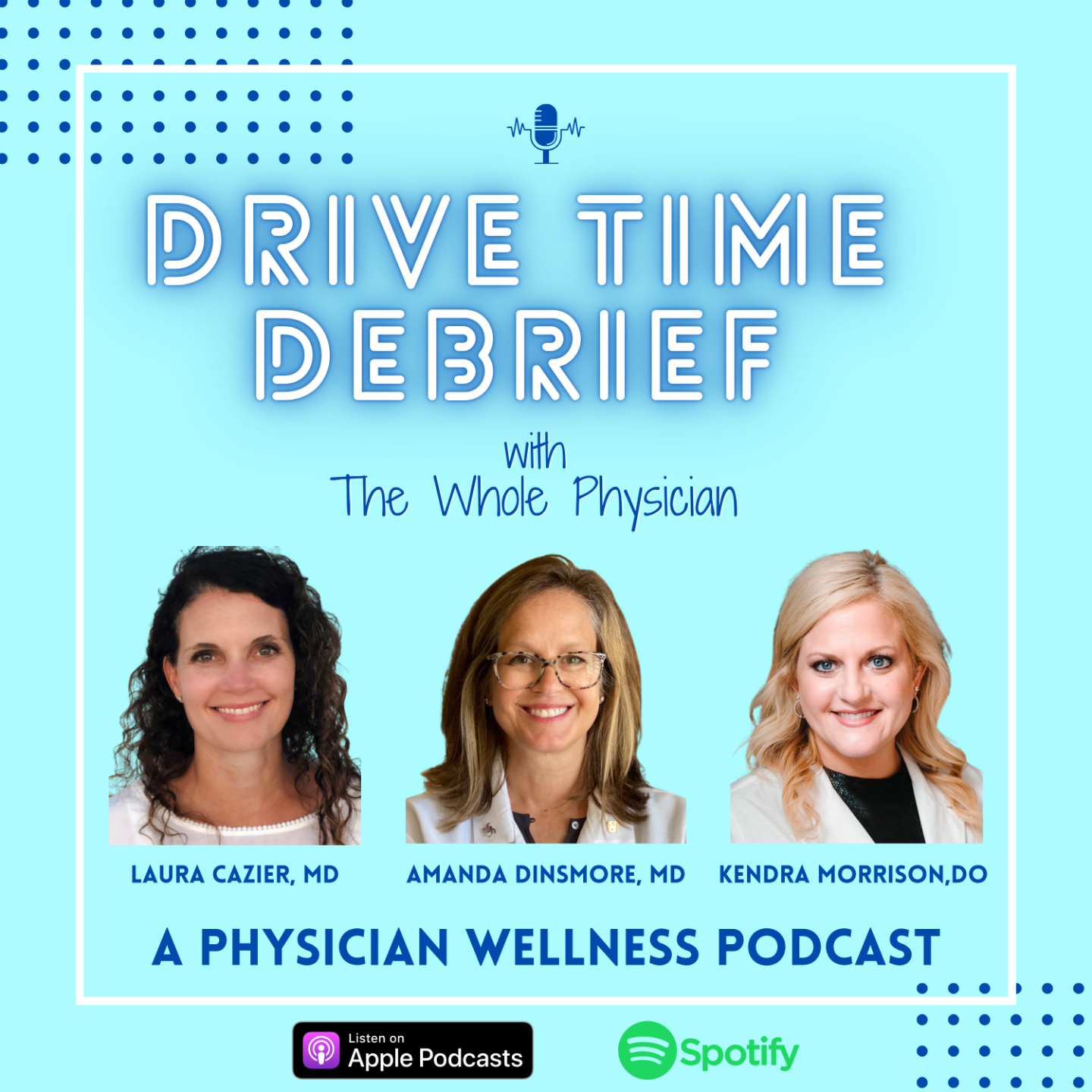
Hey guys. Welcome back to the podcast. I'm Amanda. I'm Laura. And I'm Kendra. And today we are continuing part two of a series of random internet advice. This is inspired by a day of endless scrolling that happened to me. But these are particularly compiled from a couple of posts from @JessKR on TikTok. And the assertions were worth considering. So here we go.
Okay, so this first one kind of ties into the last one we talked about, previous episode of random advice. Other people's opinions of you are none of your business because people are always going to see what they want to see. When I first heard this about other people's opinions of you are none of your business, I did not have to manage everyone's image of me. Right. Right. And if you could, that would be great. Except for you just can't. No. You could try real hard though and use a lot of energy. Yeah.
I think this is really important in medicine because sometimes no matter how hard you try, the patient's not gonna be happy. Sometimes to stay within your own integrity, other people are not gonna be happy. All the time on the internet, there's people who are like, "Doctors should work for free." Okay. I mean, that sounds great, except for how, how? How does that work? You would never ask that of anyone else.
Here's the thing, people have opinions. You have opinions like, I may want my kid to be interested in I don't know, engineering or something. He doesn't want to. Okay, great. Like that is happening all the time, all over the place. We see the world through our own eyes, and so you cannot get caught up in somebody's story for your life. Your life is between you and your own integrity. You cannot get distracted by somebody else's opinion of what they think you should be doing. Now, does it mean that you throw all care to the wind and just live an antisocial life? No. I mean, I guess that is your option. Yes. And you would likely be doing some of that from inside the prison.
I will say that the North Star or the lodestar that we can have is our own values, what's our code for how we show up with our patients? What's our code for how we live? And if we're living by that code, we can feel great despite what other people say. Now, what other people will say or think we can use as information for us without it impacting us in a devastating, rejecting way. We can look at information they might present and say, "Is there any truth to what they're saying? Do I want to take in any of this and make any changes based on their feedback?" And if not, they're saying things like, sometimes things get said in medicine that are coming from other people's childhood adaptations, like they're not even based in reality. And instead of like, rueing, be like, "Oh, okay. Well that was their bad day. That was really, didn't have anything to do with me."
Yeah. And I think the perspective, what you see is coming from the walk that you've walked and the journey you have, and you know, unless it's like a sibling that's walked that whole journey with you or a mom or dad or someone that's considerably close to you that really does know "I came from the school of hard knocks" or whatever, like, it's real easy to be that Monday morning armchair quarterback, we like to say at my house.
I'm just cringing at all of the very strong opinions I had as a teenager and young adult. Mm-hmm. And I had never been through that situation. I don't know why I thought that I mm-hmm knew, like, there's so many things in life that you do not know how you would handle something until you've been through it. Mm-hmm. So yeah, cringing on behalf of previous version of myself that was just like, "Oh no, this is how you do it." Mm-hmm. Really? Yeah. I was wrong.
Leads into our next piece of random internet advice, which is protect your peace is more valuable than proving a point, and I would say, Amanda, what you were describing, that's developmentally normal. The immature mind is very black and white in thinking. It is very right and wrong and does not appreciate nuance at all, and likes to argue to be right. And being right—one of my favorite relationship experts is Terry Real, and that's one of his losing strategies is being right. And so if we find ourselves, and I'll say too, like for me, this was one of my childhood adaptations was to try to explain like "How can you not understand what I'm saying or doing because blah, blah, blah, blah, blah, blah, blah, blah, blah." And it, more often than not, does not help.
So when we find ourselves feeling the urge to be right, now, it's one thing if you're in the middle of a surgical procedure and something and that is black or white. But if it's just, you know, if it's over politics or religion, some other issue that people, you know, pull and tug on, it's not worth sacrificing your peace to try to convince somebody else of it. Another thing I've found personally, especially younger version of myself that thought she knew everything, is that if someone's not open to another alternative, then all you do is make them dig in even further. Yep.
And that's the unfortunate thing with politics a lot of times is like when you just categorize an entire segment of the population and call them dumb or horrible or whatever, you're not accomplishing what I think that you're trying to accomplish. You're just making people dig in further. Mm-hmm. So yeah. It's that psychological reactance. Yeah. We don't want to be told what to do, say, think, how to be. It's so ingrained in us that we're agents of ourselves. We sense any infringement on our agency by people trying to dictate how we should think—we're gonna rebel every time.
Additionally, there are people who get energy from conflict. Yep. In which case if they are getting energy from this sort of interaction, it will be never ending and you will never prove the point. And so then a lot of your energy has been sucked into this nebulous black hole. There's two people in my family, wonderful people, but they do love an argument. They don't have to be right about it. They'll just keep moving the goalpost. They just love a good argument, not a shouting match or anything, but yeah. And so I have recognized that and it's just like, "I got you. Okay. I see what's happening. It's the story behind the story that's going on." Yes, exactly. It's time for me to disengage. Mm-hmm.
But I think this is the most important factor when we're talking about boundaries, which we'd love to talk about so much. Mm-hmm. Boundaries are about protecting your peace. You do not have to extend yourself out there. You do not have to open the gate to these people. You close the gate and you say, you know, "I appreciate your opinion. I also have mine, and this is as far as this conversation's gonna go." If it isn't creating any kind of mutual respect or admonishment, then it's done and that's okay.
And I think there's a lot to be learned when you do start to recognize, especially, you know, with family or relationships that are close to you. Boundaries are how we keep these people close. Because when you do stand up for yourself in your own self-integrity, you're protecting your peace. And that actually over time people will see that and they'll be like, "Hmm, I wonder what she's doing or he's doing," and you know, one small boundary after the other. Of course, initially you're gonna get pushback, right? Because you never had boundaries with these people. But that's what you should expect because before this, they benefited from you not having boundaries this whole time. So it is gonna be a change, but I think it's worth it. Yeah.
Okay. Onto our next piece of internet advice. So what do you think of this one? You don't need everyone's approval. This reminds me of the podcast we recently did—there are two people that you need to make happy or proud, and that is the 8-year-old version of yourself and the 80-year-old version of yourself. And that puts into, it's a couple of perspectives. If you are making the 80-year-old version of yourself happy, you are taking care of things that you need to take care of, including your health, maybe your finances, your relationships, most definitely you are paying attention to, and you will never regret having good relationships when it's possible. And then versus the 8-year-old version of you who had joy, who had interest, who, like, if you can tell the 8-year-old version of you how you're living your life, and she is like, "Yes, we did it." That's incredible. That's an incredible gift. So I would say those two people, if they can be on the list of people who are approving of how you're living, then that's to me a pretty good place to be. Yep. I think that that's really all that you need, all the approval you need.
Okay. Well, good. Next, this is your life and you're letting other people make you unhappy in your life. Yep. That's a good one. Now it's one thing if you're in a situation where you're trying to figure out if your job is sustainable, if you try some new boundaries, if that could maybe shift things. And boundaries, if you're in a system where you do feel like there are emotional vampires—boundaries are your friend and can definitely shift those systems to make them more sustainable. But we need to have a timeframe. You know, if a change doesn't happen in six months, we're going to have to do something. We can't go on letting ourselves have the story that other people are making us unhappy.
Because it's our own choices. Every system is perfectly created to create the results that it's getting. And so we are all parts of those systems. All these systems that we're in—our work systems, our family systems—we have to choose if we wanna continue to participate in them in the same way, if we are unhappy.
This is also a good opportunity to revisit some of the core tenets of coaching, which are based on the cognitive thought model—it's not always the circumstances that's making you unhappy, that's giving you the feelings. A lot of times it's your thoughts about it that it should be different than it is, that they should be different than they are, that they should be able to anticipate your needs and mind read somehow and intervene somehow. It's really interesting when you start getting to the why—why are you unhappy? Yeah. Go ahead. Mm-hmm.
Oh, one of my favorites is like, people should not take EMS to the ER for choking. Like, oh yeah, I see doctors get riled up about that all the time and they do and they do like forever, just about every shift somebody is doing something like that. And so if I'm gonna let that affect my day, I'm gonna be unhappy about that thing every shift. And like, no, I accept that and why should I care? That's an easy thing to take care of, and I can't stop them from using resources that way. I just can't. So yeah, so it's an awareness of if your thoughts are unreasonable, it is also an awareness of maybe this is an area where there needs to be some work with boundaries and protecting your own peace also. You could go either way and only you know, but that's also something—just use one of our free Physician Wellness Triage sessions. Let's talk about it. If you wanna get some clarity, that's a great use of that free session. Yeah.
So an example of that would be for those of you who watch Seinfeld, if you had a neighbor like Kramer, like lets himself in your apartment, eats all your cereal, eats all your food, like borrows your stuff, moves in sometimes, like most of us would find that appalling and absolutely horrible. We would set boundaries and stop that. If you choose not to stop it, if you choose not to hold boundaries, we need to be like Jerry and just like roll with it. We need to not let it freak us out because otherwise we're just going to be miserable. But if we, you know, if we want to make changes, make those boundaries.
I love the idea of, I learned this within the last couple years, that comedy, so often the rule of comedy is not to resist anything. Like people, especially improv comedy, like whatever people do, whatever your co-actors do, you just have to roll with it. And that makes it funny. It's when we resist that, it makes it a tragedy. So that's what we need to be doing if we wanna be happy.
And our last one for this episode, I really like this one a lot. Worrying is like worshiping the problem. That's ouch. Yeah. Yeah, you know, we went to Tony Robbins. Where your attention goes, your energy flows. Worrying is literally keeping the thing that you don't want to happen at the forefront of your mind. There is no relaxing with that. When you are constantly thinking about the worst case scenario or constantly thinking of what you don't want to happen—Simon Sinek says, the brain cannot comprehend the negative. So if you're like, "Don't do this. You're not supposed to do this" with the kids, "Don't eat in the living room." Tell your brain what you do want it to be thinking about. Otherwise it's completely, you know, unmanageable, which is a goal for me in my life to become just completely unmanageable. But back to the task at hand.
Well, it's like if you're skiing and you think, "Don't hit the trees. Don't hit the trees," you're gonna hit the trees. But if you're focusing on the clear space, you won't hit the trees. So yeah, if we're worrying number one, like we know, worrying does nothing. It does nothing. Our sweet little special minds think somehow it's a way we can mind control a situation to not happen. It doesn't work like that, and especially with work and we're taking work home with us, it's gonna screw up our relationships, our home life, screw up our physical health when we're like thinking about work, thinking about, thinking about it without clearly defining, "Hey, I'm home now. I need to be present here, and I need to release the outcome of whatever that thing was that we're worried about."
Yeah, what is it like 99% of the things that you worry about never happen? I will say this does serve a function of coming up with plan B, plan C if they're necessary, but outside of like just the minimal preparation, the vast majority of our worrying, and you can tell when it's not accomplishing anything anymore other than sucking the ever-living joy out of your life. Yeah. Get yourself a nice little plan. Perfect. That's the function of this. Then like for whatever reason this works for my mind of like, other than this, I'm literally pre-living 'cause I am feeling the, I've got the knots in my shoulders. I've got, you know, the tightness in my chest. I've got like a lump in my throat. Whenever I'm fully in it, I'm physically experiencing the situation. It's probably not gonna get a whole lot worse than what's happening to me right now. Fair. So maybe we just live it once. How about that? I've got my little, yeah, got my little backup plan. It never is how you think it's gonna be anyway.
So what we are good at as doctors is "All right. Here we go. Here's the problem. We're gonna figure it out." But I can wait and use that. I'll probably be better rested and in my better mind if I have recovered some, if I have recharged myself when I am stuck in incessant worrying, I am a shell mm-hmm of my best self. So yeah, I'm worshiping the problem at my own expense.
Thanks for joining us today. We hope that we've added a few nuggets to think about and simmer over. And if you found this conversation helpful, the best way to support us is by leaving a review. It helps other physicians find us, and this podcast, and it moves us up on the list, and we'd love to hear from you if any of these really resonated or if you've really had some revelation knowledge with these random thoughts from the internet. Send us an email at [email protected] and don't forget to follow us on the socials. We are on there with lots of good nuggets. You'll find us @TheWholePhysician. We love connecting with you there.
So thanks for joining us today, friends and spending your time with us. And until next time, you are whole. You are a gift to medicine and the work you do matters.