# Bowen Family Systems Theory Podcast
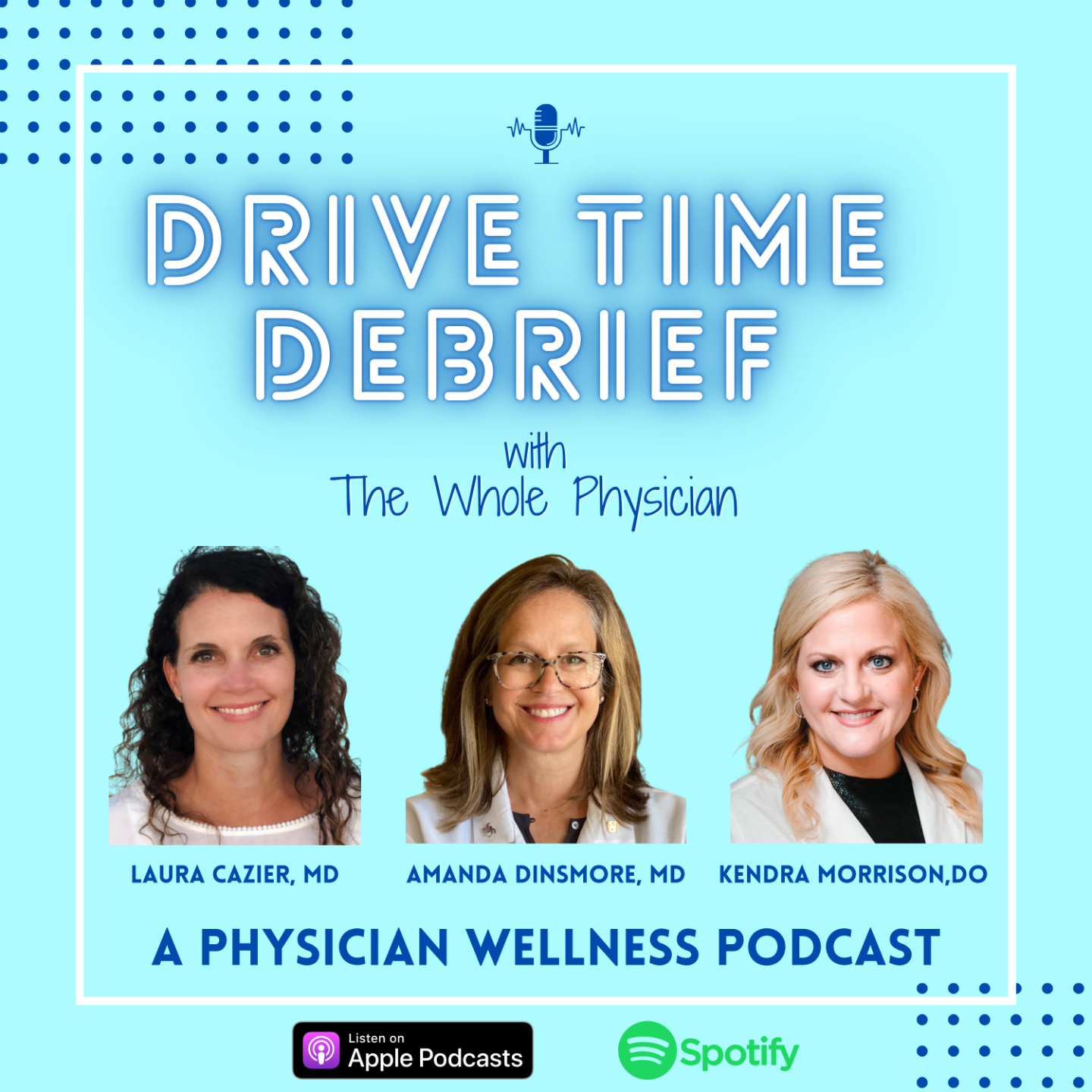
Hey guys. Welcome back to the podcast. I'm Amanda. I'm Laura. I'm Kendra. And we're gonna open with a quote. "The more self you bring into a system, the more that system changes." And that is from Murray Bowen, and you'll find out a little bit more about him in a second. But have you ever noticed how calm you felt in one moment, and then you see your phone ringing and it's from your parents or your teenager's side, and suddenly you are transported to another place in your limbic system? You are not crazy when this happens, you are connected and sometimes deeply connected. Those invisible threads that tie us to the people that we love can comfort us, but sometimes they can choke us.
Today we're diving into Bowen Family Systems Theory, which is a framework that explains why relationships feel so complicated and what we can do to change the patterns that are keeping us stuck. Dr. Murray Bowen was a psychiatrist who noticed something revolutionary in the 1950s—that families operate as emotional systems, not just as isolated individuals. And so when one person's anxiety raises in the family, it can ripple to everyone else. This episode is about understanding those ripples, learning how to bring more of yourself into the system so that we can start steering rather than just reacting.
Yes, this concept was really, I don't know, was very eye-opening to me to see the family systems that have been passed down in my own family and understanding how to break some of these patterns that are generational and not serving anyone. So Murray Bowen began his work at the National Institute of Mental Health and he was observing whole families who were living together on hospital grounds. I think that's so interesting. Just curious how that happened, but that's maybe residents. Could have been. Yeah, could have been. Certainly. And they probably came from some dysfunction for sure.
He said he realized that we inherit emotional processes the way we inherit eye color and those processes shape not only families, but workplaces and even society. That insight led to these eight interlocking concepts, which were like lenses that reveal the emotional choreography behind every relationship. And we're gonna focus on the big four, which are differentiation, triangles, multi-generational patterns and anxiety. And then we're gonna peek at others so you can kind of see the full map.
First we're gonna talk about emotional fusion and differentiation. This to me is so fascinating and once you see it, you can't unsee it. You'll see it in your family. You'll see it at the hospital or in your workplace. So fusion happens when our sense of identity blurs with someone else's emotions. So, you're out in public with a young kid and they have a meltdown and it ruins the rest of your day. You're not able to get, you know, really get your mojo back after that. Your partner's silence feels like rejection or their anxiety causes tremendous anxiety in you. Your child fails a test and you feel like a failure, or you are so worried about your parents' reaction when you need to establish a boundary. Like these all sound like familiar scenarios and these are symptoms of psychological enmeshment.
There's another example, a parent who feels anxious whenever their child is upset, and to me, I'm like, well, of course, of course I'm gonna be anxious when my child is upset. They rush in to fix the problem. It's interesting though that our anxiety about our child's anxiety and when we go to fix things doesn't actually make the system better. It's about us trying to relieve our anxiety by fixing things rather than just sitting with them, normalizing their experience, hearing them, listening deeply and allowing them to figure out the problems, the solutions to their own problems. And to me, like I had no idea about this until very recently, I always was trying to fix my kids' problems or say, "Oh, it's not that bad." And it really was anxiety in me. I'm trying to feel better because if my child's not okay, how can I be okay? You know? So we try to fix and they feel invalidated, they feel unheard, they feel frustrated, and nobody's anxiety is better other than ours temporarily. So you get this short-term relief and the long-term message is that you can't handle distress without me, and that's not the message we want to give them.
Differentiation is the antidote to that. It's the ability to stay connected and stay yourself. So not tell myself the story, "Oh, my child is going through this horrible thing. This is because of some parenting failure on my part." No, no. Your child is a different human and I'm telling myself this as much as anyone else that is my child. It is so interesting. My teenage son taught me this. He was like, "When I tell you that I don't feel good enough at something and you tell me I'm wrong, it feels terrible to me." And I was like, "What?" I was like, I don't know. I think it was kind of miraculous insight that mm-hmm a young man like that could give me that. But he was absolutely right and that the appropriate and differentiated way I could have approached that would've been, "Hey, tell me more about that. I don't see you that way, but that must feel hard. What is it that you think is making you feel that way?" rather than "What, no, you're amazing. Of course you can do that, blah, blah, blah." So it does not come naturally, especially for anybody who grew up in an enmeshed family system, which is probably most of us.
And when we can feel calm and not feel anxious that our child is feeling anxious about their failure or situation or whatever it is, it helps them to be calm. So it's not detachment. This is maturity. This is emotional maturity. It says, "I care deeply and I'm still, I'm not gonna infect you with my anxiety. I'm gonna create my own peace. Hold space for whatever you're going through, offer support, but not try to change your experience."
So Bowen saw differentiation as the measure of emotional adulthood, which I think is so interesting. So a work example would be like, I call a consultant, they rail on me and this almost never happens anymore. But you know, they'll say terrible things and then in the past, I could go and ruminate on that for days instead of just making it his problem. And that's what I do now. "Are you okay? Are you okay?" It's his problem and I say his 'cause there has been a woman or two, but it almost always has been. I'm not responsible for that. His reaction has nothing to do with me. So when we can differentiate like that, we're growing into emotional adulthood. And when we let others control our moods less, the more positive influence we have on the emotional climate around us.
One of my favorite therapists that I follow says the greatest gift that we can give to the people we love is the ability to calm ourselves down. And I think that's really true. When we can sit in the face of other people's anxiety or sadness or distress and remain calm and provide that calm, steady space, it can transform relationships.
So the next thing he talks about is triangulation, triangles and triangulation. And I see this at work a ton. People will be mad at someone and instead of talking to that person directly, we will talk to somebody else. When anxiety rises between two people and they pull a third person in, that's called a triangle. So like an example would be a couple is arguing and one vents to their child. That is not helping the couple, and it's infecting the child with anxiety. A physician vents to a nurse about an administrator, but refuses to address it directly. You know, it's one thing if you try to address things directly and you get a stone wall of dismissal, that's one thing. But if instead of taking problems head on, we're triangulating to try to diffuse our anxiety rather than addressing it, that is a problem. It lowers the tension between the first two people, but it displaces it onto the third. And this is particularly harmful when we're talking about displacing this anxiety onto our children.
So triangles soothe anxiety short term, but they freeze growth long term. So to step out of a triangle, notice when you're being recruited. "Am I carrying someone else's conflict?" And certainly we can ask people for advice—that's different than just venting and saying, "Isn't this so toxic, blah, blah, blah." It's different than trying to get their validation. I hope that's clear. We can certainly go and ask for input. "How am I showing up that's not being kind or appropriate?" But when we're recruiting people to try to be on our team, so to speak, that's triangulation.
So if somebody is trying to recruit you, you can say, you know, "That sounds like something to bring up with them. It would be reasonable to bring that up" and tolerating that direct heat of addressing the issue head on. That is emotional bravery. And it builds differentiation and the reason it's bravery is because when we have an issue with someone and we bring it to them, we are risking their invalidation, their almost certain invalidation of our experience, and it's our responsibility as emotional adults to take it to them directly, not in a confrontational, rude, insulting, blaming, accusing way, but in a, "Hey, I just need you to know the impact this is having on me. I just need you to know that when you do this, I feel this. This is my experience and I'd like to talk about it."
Yeah, that's good. I think there is a way to do that. I wonder sometimes if, you know what we label as like the non-confrontational person, you know, would shy away from this opportunity. But I wonder if, being able to maybe bring it internally, like you said, drawing a line in the sand to say that I'm going to protect my peace. In doing so, I must talk to this person. You know, like maybe reframing it so it doesn't seem like it's just so confrontational 'cause people will identify that "I'm not a confrontational kind of person." But is it important to you that you stay steady? Is it important to you to keep your peace? Is it important to you to know that you're gonna have to deal with this person over and over again, especially in the hospital when we're on teams and we see the same people over and over again? I don't know. It's just interesting that I hear that and I wonder for those people that carry that identity, if it wouldn't be something that could be shifted to like, "Oh, my peace really does matter. And so in this much, I'm going to bring this up."
And so that's a really good point. Going on to the next topic, that nuclear family emotional process and family projection. So parents often transmit their anxiety, which we talked about to their children without realizing it. And I confess, like I am all about this. This is called the family projection process. So for example, an anxious parent might over-monitor the children's grades, teaching dependence instead of confidence. And so just constantly micromanaging like, "Did you get your homework? Did you do this?" And it's funny because like you think you're doing them a favor, like, "Oh, holding them accountable." You even may tell yourself, "Oh, I'm just holding them accountable to stay on top of it." But really you're teaching them to be dependent on that accountability. "Oh, someone else will make me do my homework or make me turn in my work on time or whatever."
And so the nuclear family emotional process describes how a family system manages stress through conflict, over-functioning or emotional distance. So this awareness lets us shift the dance. You can ask yourself, "Whose anxiety am I carrying right now?" That's bringing it internally, really getting quiet and figuring out where you are first. "Am I having a feeling of anxiety because it's some kind of unresolved conflict within myself, or am I actually anxious? I'm carrying somebody else's process right now?"
And so this can get transmitted across generations like Laura started in the podcast with—patterns echo down generations like temper, the silent treatment, like just shutting down, avoiding—all of these types of coping mechanisms. They get handed down in generations. Perfectionism. I mean, we talk about it all the time that we were high achievers and now we, you know, our maladaptive high achievers are perfectionists, but that can actually get handed down. The risk of that can start in generations even before you.
So it might look something like, you know, grandfather rage, father over-controlled, and now the son explodes under pressure. Same energy, just new decades. So it's the same process, but it's manifesting different ways because these are different humans. They have their own personalities and their ways to cope, but unbeknownst to them, it's actually a trait that's passed down from generations. So sometimes sketching what we call a genogram, which is a family tree of emotional patterns, can reveal this inheritance. And like we said, it can bring real clarity. You can actually spot the pattern and then decide, "Okay, this ends with me. Oh, I see what's happening here." And it may take a few times of gathering with the family for it to become obvious. I have to testify to that. But then you recognize, and maybe it's something that you can work with your partner about. You know, you have in-laws and your family and you have this whole dynamic. But then when you have the conversation, you can say like, "Hey, I'm noticing this, or I now have an awareness of this." And maybe deciding together that this stops with us as the parents that now have more information and a better handle on this.
So each person who gains awareness actually raises the overall maturity of the family. Wow. Right. So just even being aware, this is how we begin to establish legacy. And I'll tell you like, I relate to this a lot because one of my values is legacy. Legacy is very important to me. I have this in almost every facet of what I do, whether it be, you know, with this business or with work or teaching. I believe in legacy. I feel like it's my duty. I align with legacy and so this really resounds with me because I have noticed this. And it has been conversations that I've had with my spouse, like, "Hey, I'm aware that this is what has been handed down whether it was on my line or my husband's. And I think we need to stand in agreement that this stops here—that we no longer stand for this kind of, you know, personality or situational emotional instability, whatever you wanna call it." But basically just getting in alignment and that creates a force for good, that creates that ability to say, you know, you can give grace still. Like our parents did the best job they could with the tools they had, but you know what, we're just gonna stand up for better. We want better for the next generation or who we're raising.
So, yeah. I wanna add something too, to what you said. Okay. Because I was talking to a clinical psychologist the other day and just talking about these family systems and these enmeshed family systems. And I said, you know, "I suspect that probably 80% of doctors come from these systems." And he was like, "Oh yes, absolutely." So just so you know, that's the eye with which the psychological world looks at doctors is that yeah, there's a reason that the experience of medical training was acceptable to us. There's a reason because it felt familiar. Mm-hmm.
Okay. Let's talk about my maladaptive strategy of choice, emotional cutoff. Sometimes when we're uncomfortable or we're anxious, we just cut people off. You might avoid a draining sibling or stop calling a parent who triggers guilt or whatever it may be, and in the moment it feels peaceful until contact resumes and then all of those things just come flooding back. Cutoff, this is so fascinating, is fusion in disguise. It's just that the cord is buried.
So a healthier route, when you're able—I mean, for certain, sometimes there are people in families that do need to be cut off for good. There's no resolution that's gonna be happening. But if you're able, the healthier route for you and subsequent generations is calm contact—limited is a good idea. Maybe you don't wanna do a four week vacation to Savannah somewhere before you're able to tolerate that sort of thing. So limited, steady, and kind. That's how we grow from reactivity into maturity by staying steady. And that starts with little practices, 1% changes at a time. Staying steady in the presence of discomfort. That's a hard thing for somebody like me to do. I'm just like, "I can fix this. We never have to address this again. All done." It's not true though because anytime you come back into contact, it's just the same old thing. And you've made no progress.
So let's talk about sibling position and societal emotional process. This isn't hard and fast, but there are some trends that seem like it plays into birth order. A trend all over my social media feeds is "You're the eldest daughter who, you know, had to do all that. How is your job in healthcare doing?" It's like, "Ooh," all three of us are eldest daughters, right? Yeah. So, yeah. So there are trends where sometimes the oldest takes charge many times. The youngest is the charming one. And then the middle tends to be the mediator, can go between both sides. Knowing your default role, which again, is not hard and fast, but knowing what your trend is might help you choose, not just react.
And let's talk about anxiety because it can scale up into entire societies. You see this, right? The stuff that's coming across the news, the entire system starts getting more and more anxious. We are infecting each other with it. Economic stress can cause it, political polarization can cause it, rapid changes can cause it. Bowen calls this the societal emotional process. Our job—recognize what's happening. Be the thermostats, not the thermometers. Hold steady so that others can regulate too. What a gift. Mm-hmm. To give that to people around you who are losing their minds over the latest thing that popped up on their newsfeed.
So let's talk about the role of anxiety. Anxiety fuels every one of these patterns. Discomfort fuels every single one of these patterns. Take Mary, the single mom who micromanages because she feels failure. She's already like heaped up society's judgments on her, internalized judgments on her. Her anxiety to do the best she can possibly do comes from love, but it can teach dependence, and I promise you, a child that you have overinflated their ego and never allowed them to have their edges smoothed out by challenges is not setting up what you want. That is a great recipe for somebody who lacks empathy. It's a great recipe for narcissism. Your love is coming from a fantastic place, but the result of that may not be what you are planning on.
Managing anxiety begins with awareness. Noticing those racing thoughts, the urge to fix—instead, just like Laura mentioned earlier, when you are trying to soothe somebody else's anxiety with your own anxiety, do you think that's grounding or does everyone spin out from there? Pause, breathe. Be that base, that safe place where that person can seek you out. Respond, don't react. When one person can stay calm, that can be your gift. That can be what you give to others. Others can borrow that calm, that is emotional leadership.
So how this shows up in healthcare systems. Hospitals really are emotional ecosystems. They're complex, high stakes. There's anxiety everywhere from patients, families, doctors, nurses—with a poor new nurses looking at my RBF like being afraid of me, I'm like, "Sorry guys." You can't rest until everyone is happy with you. I see this in clients who get behind in their clinic schedules. They're so afraid of making patients mad. And guess what? It makes people mad when they don't stay on time. So if you can't rest until every patient likes you, every nurse and consultant is happy, your worth fuses with your patient satisfaction scores. Differentiation means remembering, "I'm responsible for care quality, not everyone's comfort. I will do the best I can. I can't control what's in other people's brains."
Triangles—nurse vents to you about the charge nurse, a consultant triangulates through the residents. It relieves—and I've seen this, this is so, so damaging when a consultant or when an attending is speaking ill of another physician to residents. It's just really immature. It's not healthy. A consultant triangulating relieves that tension short term, but it blocks growth long term. The best approach is compassionate directness, and a lot of times you get that piece of information that's missing that actually makes what they did make sense. And you're like, "Oh, oh, I'm glad I didn't just make assumptions."
When we're compassionately direct—someone who's triangulating with us, we might say, "That sounds like something you can talk to them about" or "You know, I think they need to hear about that." It breaks that cycle.
Family projection and teams—anxious leaders push pressure downward. Our anxiety creates anxiety for the whole team, and it does not make for better medical care. When administrators are worried about metrics and they push that anxiety on physicians, physicians worry about throughput, and then the residents worry about their evaluations. That anxiety is cascading until somebody grounds it, and you're listening to this, you're getting this information. You can be one who helps stop this cycle.
Emotional cutoff. When we get super burned out, sometimes we're isolating like our minds think, "Oh, this is helping me survive." That distance protects in the moment, but it deepens system anxiety. So when we're cut off, our families feel more anxious. When we're cut off, our colleagues might feel more anxious. Healthy differentiation means being able to stay connected while maintaining boundaries, being able to be calm and present and not absorb other people's emotions.
And then the societal emotional process in healthcare. Healthcare is just literally swimming in external anxiety. There's concerns about litigation, finances, even politics and recognizing that context helps you depersonalize stress. It's the system's temperatures, systemic issues. "I'm gonna keep myself calm." So one emotionally grounded clinician can shift the tone of an entire team. When we're not engaging in gossiping, triangulation, we're not shaming, we're not blaming, we're not cutting off, but we're regulating ourselves and being kind, having compassionate interactions. We can regulate the room. And that is real leadership. That's what Murray Bowen would call emotional adulthood and emotional leadership.
Yeah, the goal really isn't perfect calm, it's just staying connected while remaining yourself. So staying engaged, but staying true to yourself. Every time you pause instead of react, you're building that emotional muscle. Every time you let someone feel what they wanna feel without fixing it, you are actually raising the system's maturity. Changing one person, standing up for yourself, creating a boundary—the whole system shifts and it can start with you.
So I hope this was encouraging to you. This was a lot to lay down. So you might wanna put this one on repeat a couple of times, but we can take a breath together. We can do this together. The eight lenses of Bowen's theory remind us we're all part of an emotional system. Differentiation brings freedom within connection. Triangles and projection lose power when seen clearly. And managing anxiety is an act of leadership, and we're all leaders at home, at work, wherever we go, we are leaders.
So this week, notice when someone else's storm tugs at your sails. Pause. Breathe. Be intentional, especially on that exhale, and ask "What exactly is mine to carry and what is not?" And every time you answer with calm clarity, you elevate every system you touch, your family, your team, the hospital, the office, wherever you are.
So we love Brené Brown. So we're gonna close with a quote from her. "Courage is telling our story with our whole heart." And we love the wholehearted. We definitely love the wholehearted.
So thank you for joining us today. That's it for today's episode. If you found this conversation helpful, the best way to support us is by leaving a review. It helps other physicians find the podcast and moves us up on the list. And we'd love to hear from you. If this was a lot, if you wanna unpack this, go to our website, click on a Physician Wellness Triage Session, we'll meet with you. We would love to do this with you. Or if you have an experience with this or just need some clarity, email us at [email protected]. And don't forget to follow us on the socials, go to @TheWholePhysician. We love connecting with you there.
Before you go, we've got a little gift for you. We've created a Podcast Fast Track, which is a handpicked collection of our most high yield episodes designed to help you jumpstart your journey to freedom from burnout. We've got almost 200 episodes and that can be overwhelming and you may not know where to start. So we've done the work for you, go to www.thewholephysician.com/fasttrack and you can discover your personalized path to wholeness and healing.
So until next time, you are whole. You are a gift to medicine and the work you do matters.