Abstract
While physician marriages statistically have lower divorce rates, research suggests they are often less happy, a pattern rooted in the "strategy of postponement," in which relationship problems are indefinitely deferred in favor of professional demands. This article examines the unique relational pitfalls physicians face, including how traits that make clinicians effective, perfectionism, hard work, competitiveness, multitasking, can corrode intimate partnerships over time. Drawing on the work of physician-couple specialists Wayne and Mary Sotile, Gabor Maté's framework for relational choices, and Brené Brown's research on unconditional love, the authors offer a practical, honest guide to relationship health for high-achieving couples, grounded in the premise that you can only change how you show up, not your partner.
Key Findings:
- ● Physician marriages tend to have lower divorce rates but lower relationship satisfaction, driven by a "strategy of postponement" in which emotional intimacy is chronically deferred behind professional demands (Gabbard & Menninger, JAMA, 1989).
- ● Happy, stable relationships are associated with lower stress and reduced depression, but unhappily married individuals have worse mental health outcomes than those who are single, making relationship quality a genuine clinical concern.
- ● The same traits that define clinical excellence, relentless work ethic, perfectionism, hurrying, competitiveness, multitasking, predictably damage intimate relationships by exhausting partners, increasing criticism, and undermining presence (Sotile & Sotile, 2023).
- ● Attempting to control or change an adult partner is not only ineffective but actively harmful, consuming emotional energy, undermining the partner's autonomy, and keeping the physician fixated on a hypothetical person rather than the actual one (Maté).
- ● Self-acceptance is the foundation of relational compassion: physicians who can accept their own imperfections are better positioned to extend unconditional acceptance to their partners, the prerequisite for genuine intimacy (Brown).
Three choices when facing a difficult relationship (Maté)
✓ Sane option 1
Accept and stay with understanding
Recognize that your partner's behaviors are the best coping strategies they've found so far. Their journey is theirs. You choose to stay as part of their life, knowing that with compassion, not control.
✓ Sane option 2
Love them from a distance
You can love someone and still set a boundary that removes them from your daily life. This is not a failure, it can be the most loving, healthy choice for both people.
⚠ The insane option
Stay while trying to control
Begging, encouraging, pushing, shaming, or manipulating a partner to be different. This misuses your energy, undermines their autonomy, and keeps you captivated by a person who doesn't exist.
How physician traits can harm relationships
Relentless work ethic
Leaves little energy for the relationship after a demanding shift.
Perfectionism
Makes partners feel constantly criticized and alienated.
Chronic hurrying
Makes the relationship feel like another item on the to-do list.
Competitiveness
Turns partners into rivals rather than teammates.
Multitasking
Leaves partners feeling like they never have your full presence.
"Teachable moment" habit
Lecturing a partner feels like criticism, not care.
Six practices that make high-powered partnerships work
- 💪 Develop a relationship work ethic
Loving a partner takes sustained effort, dedication, and courage, the same qualities you bring to your clinical work.
- 🛡️ Protect your time together
Every "yes" to extra shifts is a "no" to your relationship. Guard the boundaries that separate your partnership from work demands.
- 🎉 Have fun intentionally
If you can't remember the last time you enjoyed each other's presence, plan something now. Connection requires joy, not just coexistence.
- 🤝 Forgive yourself and your partner
If you choose to stay, forgiveness is not optional. Lingering resentment is incompatible with genuine partnership.
- ❤️ Cherish openly
When did your partner last feel that you're genuinely glad they're in your life? Admiration, acknowledgment, and appreciation need to be expressed, not assumed.
- 🗣️ Apologize without reservation
The three most powerful words in any relationship, per the Sotiles: I. Am. Sorry. Apologizing is not weakness, it is the backbone of repair.
"You can't change your partner. You can only change how you show up in this partnership. Being the best version of yourself gives your relationship its best chance of success."
Publication details:
JOURNAL
Common Sense (AAEM)
VOLUME / ISSUE
Vol. 31, No. 4, pp. 11–12
PUBLISHED
July/August 2024
AUTHORS
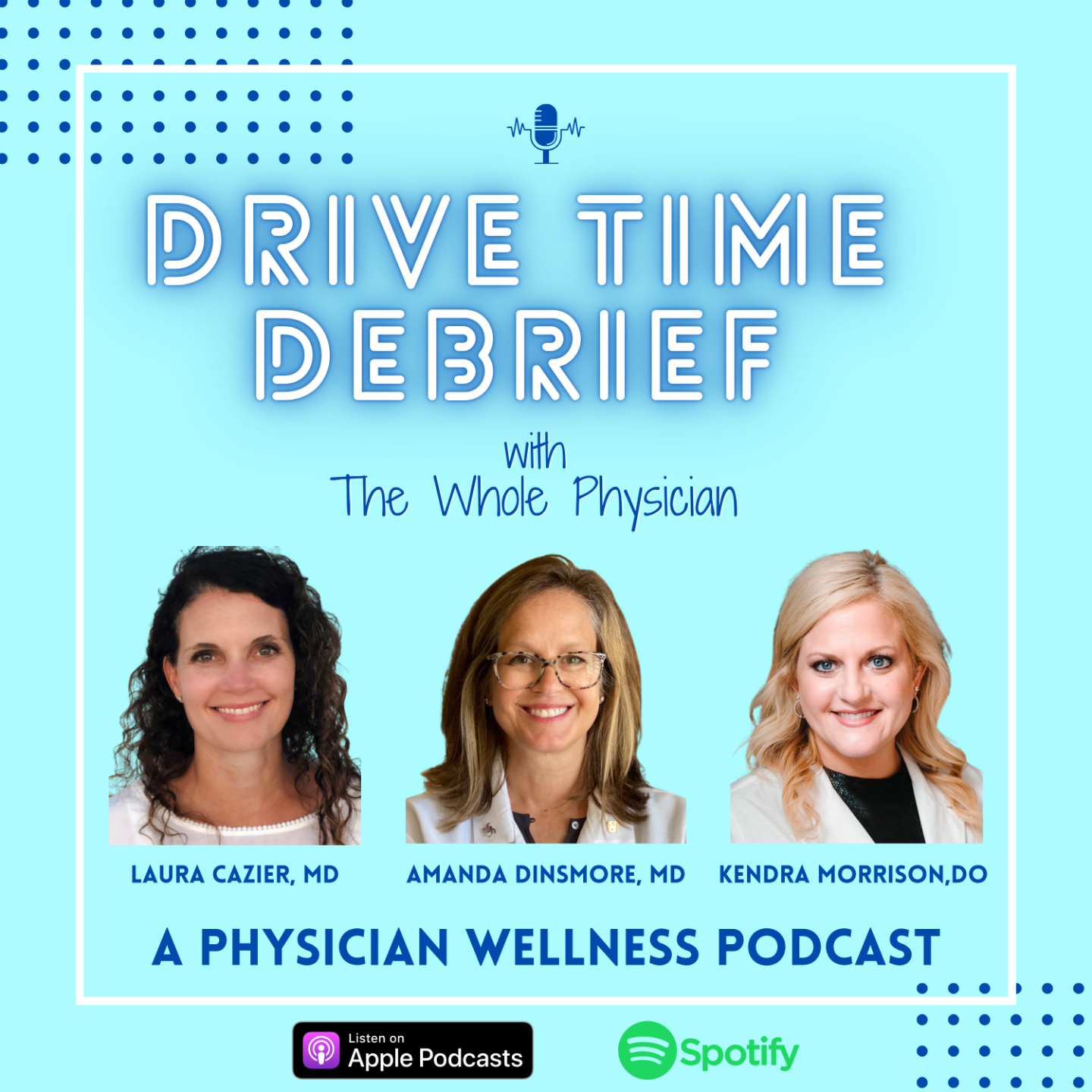
Laura Cazier, MD; Amanda Dinsmore, MD; Kendra Morrison, DO
SERIES
The Whole Physician
PUBLISHER
American Academy of Emergency Medicine (AAEM)