Abstract
Nearly half of physicians report significant emotional exhaustion linked to patterns of self-critical perfectionism, a trait medical training actively cultivates but rarely addresses. This article examines the prevalence, neurological origins, and measurable harms of excessive self-criticism among emergency physicians, drawing on research from Kristin Neff's self-compassion framework and Jill Bolte Taylor's four-brain-character model. The authors argue that harsh self-criticism is not a necessary byproduct of high standards but a modifiable, habitual thought pattern that worsens burnout, anxiety, and depression. Practical, evidence-based strategies, including mindfulness, cognitive-behavioral reframing, and self-compassion cultivation, are offered as sustainable alternatives to the self-flagellation many physicians mistake for professional rigor.
Key Findings:
- ● Nearly half of physicians report significant emotional exhaustion and depersonalization associated with self-critical perfectionism, a pattern medical training reinforces rather than corrects (Martin et al., BMC Health Services Research, 2022).
- ● Byron Katie's three domains framework (your business, someone else's business, God's business) offers emergency physicians a rapid mental triage tool for redirecting attention to what is actually within their control.
- ● Excessive self-criticism activates the brain's threat-detection systems, placing physicians in a state of chronic self-defense against themselves, compounding the external stressors already inherent to emergency medicine.
- ● Self-compassion, comprising self-kindness, common humanity, and mindfulness (Neff, 2003), is associated with lower depression, anxiety, and stress, and greater emotional resilience after setbacks.
- ● Harsh self-criticism is not a fixed personality trait; it is a changeable, habitual thought pattern. Positive reinforcement motivates better and faster than self-punishment, and self-compassion does not reduce motivation or performance standards.
- ● Physician wellness interventions combining peer support, coaching, and professional mental health collaboration significantly improve burnout outcomes (West et al., Lancet, 2016).
The four brain characters and where physicians get stuck
Based on Jill Bolte Taylor's Whole Brain Living framework. Many physicians over-function in characters 1 and 2, and under-function in 3 and 4.
Left brain · Thinking
Character 1
Logical, organized, goal-oriented. The high-achiever and clinical decision-maker.
Left brain · Emotional
Character 2: The Inner Critic
Holds past pain, fear, and limiting beliefs. Replays failures and self-judgment.
Right brain · Emotional
Character 3
Playful, creative, spontaneous. The joyful and expressive self.
Right brain · Thinking
Character 4
Deeply connected, peaceful, and expansive. The grounded, present-moment self.
Four strategies to quiet the inner critic
- 🧘 Mindfulness practices
Observe self-critical thoughts as transient mental events rather than absolute truths. This reduces their emotional charge without requiring you to suppress or argue with them.
- 🧠 Cognitive-behavioral reframing
When spiraling, challenge the thought with five questions: Is it true? Is it 100% true? How do I feel when I have it? Who would I be without it? What's the opposite, and what's true about that?
- 🤝 Cultivating self-compassion
Treat yourself with the same understanding you'd offer a colleague who made a mistake under difficult circumstances. Self-forgiveness is not weakness, it's what makes growth sustainable.
- 💬 Seeking professional support
Trusted colleagues, physician coaches, and mental health professionals provide external perspective and practical coping strategies, and evidence shows this collaboration meaningfully reduces burnout.
"Would you tell your colleague that he was an idiot for missing a minor detail when there were incessant interruptions, incredibly sick patients, and overloaded hall beds? If the answer is no, it's not okay to talk to yourself that way."
Publication details:
JOURNAL
Common Sense (AAEM)
VOLUME / ISSUE
Vol. 32, No. 2, pp. 16–17
PUBLISHED
March/April 2025
AUTHORS
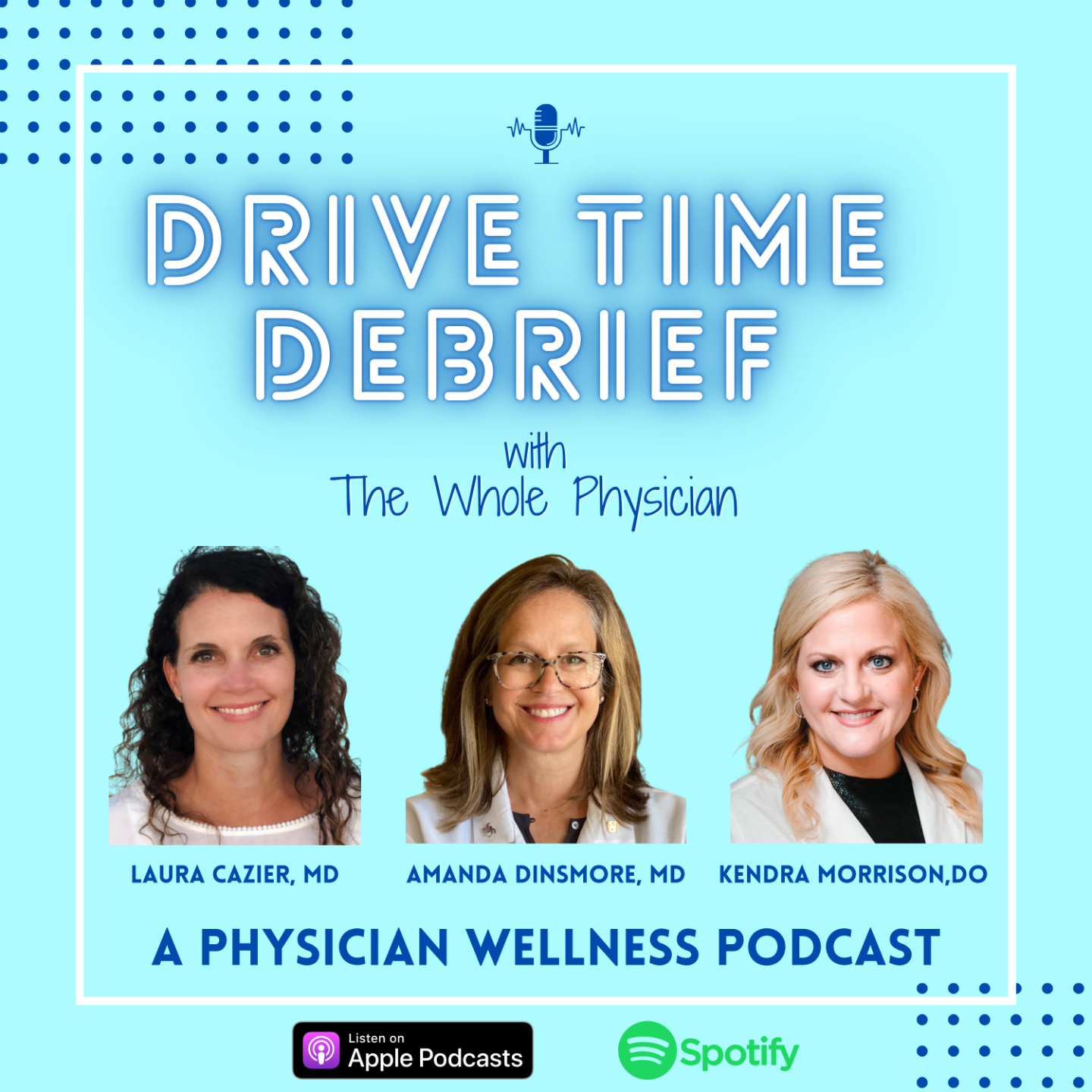
Amanda Dinsmore, MD; Kendra Morrison, DO; Laura Cazier, MD
SERIES
The Whole Physician
PUBLISHER
American Academy of Emergency Medicine (AAEM)