Abstract
Medicine has long celebrated a model of self-sacrifice that mirrors Shel Silverstein's The Giving Tree, giving everything until nothing remains, then apologizing for not having more to give. This article challenges the cultural valorization of boundaryless service in emergency medicine, drawing on research into altruism, burnout, and codependency to distinguish healthy generosity from self-destructive self-sacrifice. Using the extended metaphor of the Giving Tree, the authors examine how physician martyrdom enables dysfunctional systems, deprives future physicians of healthy role models, and ultimately harms both the clinician and the patients they serve. The call to action: establish boundaries, protect personal reserves, and rewrite the ending, not for self-interest, but for sustainable, effective, long-term service.
Key Findings:
- ● Self-sacrifice in medicine is culturally celebrated and training-reinforced, but research shows that those who give inordinately of themselves without protecting personal reserves become less effective: teachers who over-give have worse student outcomes (Harvard Business Review, 2017).
- ● Recipients of a high Canadian honor for exceptional giving scored above average in concern for others, but also in concern for themselves; self-regard sustains motivation and effectiveness rather than diminishing altruism (J Pers Soc Psychol, 2011).
- ● The Giving Tree model in medicine mirrors codependency: low self-esteem, approval-seeking, and unhealthy attachment to a controlling or manipulative system, a dynamic that enables dysfunctional institutions rather than improving them.
- ● Generosity and self-sacrifice are not synonymous: healthy altruism means helping others without harming yourself, prioritizing your needs alongside theirs, and giving in ways that create more givers rather than enabling takers (New York Times, 2020).
- ● Medical systems will not change as long as physicians continue to absorb the consequences of dysfunction without limit; physician boundary-setting is not selfishness, it is the mechanism that compels systems toward mutual respect and reform.
Resistance vs. Acceptance: What Each Looks Like in the ED
⚠ THE GIVING TREE MODEL
Self-sacrifice without limits
- ● Always available; never says no to extra shifts
- ● Works sick; denies personal physical needs
- ● Derives worth from how much they give
- ● Enables dysfunctional systems by absorbing their costs
- ● Ends up burned out, depleted, with nothing left
- ● System learns nothing and changes nothing
✓ HEALTHY ALTRUISM
Generosity without self-harm
- ● Gives fully when well-resourced; protects reserves
- ● Models boundaries for future generations of physicians
- ● Cares for self as thoughtfully as for patients
- ● Compels systems to find sustainable solutions
- ● Remains effective, a tree that keeps producing fruit
- ● Creates more givers rather than enabling takers
Signs you may be living the Giving Tree model
- 😮💨 Picking up unfilled shifts when already stretched
Even when you know it will cost you, the pull to fill the gap feels stronger than the pull to protect yourself. The system has learned to rely on this.
- 🤒 Coming in sick rather than calling out
The legend of the physician who worked through anything is celebrated in medicine but it models unsustainable behavior and risks patient safety.
- 😶 Feeling guilty for having needs
If needing food, rest, or a bathroom break feels like a moral failing, the system has successfully internalized its expectations inside you.
- 🔁 Absorbing system dysfunction so patients don't feel it
Noble in the short term but it removes the signal the system needs to change, and the cost lands entirely on you.
"Generosity is not about sacrificing yourself for others, it's helping others without harming yourself. We have to be a tree that produces fruit and produces new trees. Future generations of doctors need to see what it looks like to treat ourselves as well as we treat our patients."
Publication details:
JOURNAL
Emergency Medicine News
VOLUME / ISSUE
Vol. 45, No. 6B
PUBLISHED
June 20, 2023
AUTHORS
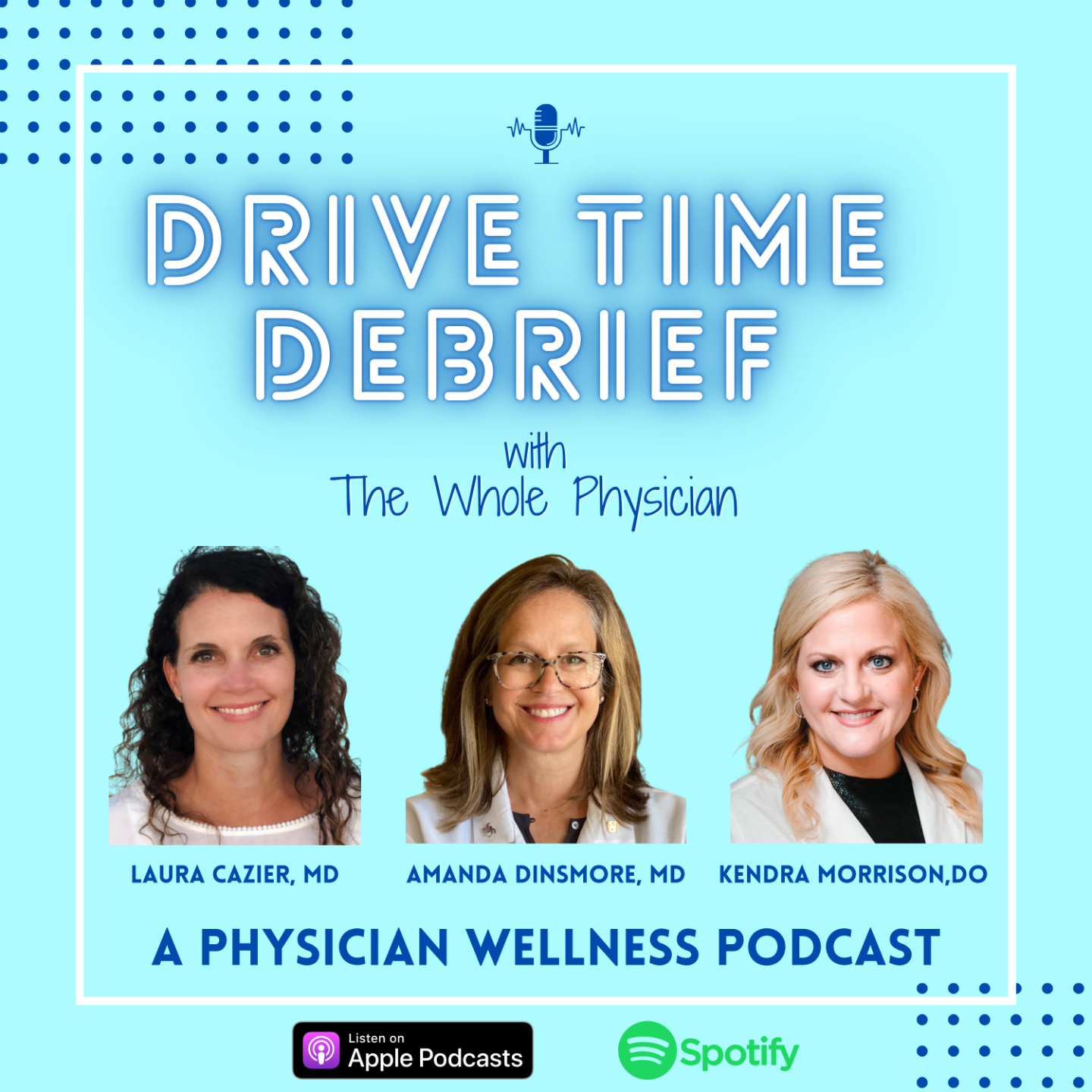
Amanda Dinsmore, MD; Laura Cazier, MD; Kendra Morrison, DO
DOI
10.1097/01.EEM.0000944692.08325.2b
PUBLISHER
Wolters Kluwer Health / LWW