Abstract
Emergency physicians can generate a 20-item differential for chest pain but collapse their entire emotional experience into three words: stressed, burned out, or fine. This article applies the clinical diagnostic model to emotional self-assessment, introducing emotional granularity, the ability to distinguish nuanced emotional states with precision, as a learnable skill with measurable neurobiological benefits. Drawing on fMRI research by Lieberman and colleagues showing that affect labeling reduces amygdala activity and increases prefrontal cortex activation, the authors demonstrate that naming emotions accurately is not just psychological insight but active neurobiological intervention. The Feelings Wheel (Dr. Gloria Willcox), metacognitive awareness, and expressive writing are presented as clinical tools for moving from vague emotional diagnoses, "stressed," "soul numbness NOS", toward accurate identification and targeted intervention.
Key Findings:
- ● Most physicians operate with dangerously low emotional granularity, unable to distinguish between frustration and helplessness, disappointment and overwhelm, grief and dread, labeling the entire spectrum as "stressed" and applying the same unhelpful treatment: more rumination and more depletion.
- ● Emotional granularity is a learnable, measurable skill: people with higher emotional granularity regulate emotions more effectively, experience less distress, make more adaptive decisions, and show lower rates of depression and greater overall psychological health (Barrett et al., 2001).
- ● Affect labeling, naming a specific emotion, reduces its intensity and decreases amygdala activity while increasing prefrontal cortex activation in real time; naming an emotion literally changes cerebral blood flow (Lieberman et al., Psychological Science, 2007).
- ● Metacognitive awareness, the ability to observe thoughts and feelings rather than simply experiencing them, is the prerequisite for emotional granularity; it transforms automatic rumination into a conscious process physicians can examine and redirect (Wells & Matthews, 1996).
- ● Expressive writing, putting emotional experiences into words after difficult events, has been shown to increase positive affect and support emotional processing; the act of finding the right word for a feeling is doing more neurological work than it appears (Kircanski et al., 2012).
Four Implementation Steps: Applying Diagnostic Rigor to Your Emotional Life
- 🔍 Use the Feelings Wheel like a differential
When you notice vague distress, start broad, am I in the fear family? anger? sadness?, then narrow it down. "Frustrated" and "helpless" are not the same thing and don't need the same intervention. Treat yourself with the diagnostic rigor you'd apply to a patient.
- ⏸️ Do a metacognitive pause before or after hard cases
When an urgent thought arrives ("this will be a disaster"), pause and ask: Is this actually true? Is it helpful? What emotion is underneath it? Seeing it for what it is, rumination, not preparation, creates a choice.
- ✍️ Say it out loud or write it down
Naming the specific feeling, aloud or on paper, reduces its charge. After difficult shifts, write down recurring thoughts, then ask: Is this true? What would I say to a colleague thinking this? What's a more useful frame?
- ✅ Accept it, then decide what to do
Once named, accept the emotion as valid, it showed up for a reason. Then ask: do I need to act on this, or can I let it move through? Acceptance alone often removes the charge without requiring further action.
"Just like a CT scan, emotional granularity gives us a more accurate picture of what's actually happening inside. That accuracy, same as it does clinically, points us toward a better understanding of what's going on and how to make it better."
Publication details:
JOURNAL
Common Sense (AAEM)
VOLUME / ISSUE
Vol. 33, No. 3, pp. 14–15
PUBLISHED
May/June 2026
AUTHORS
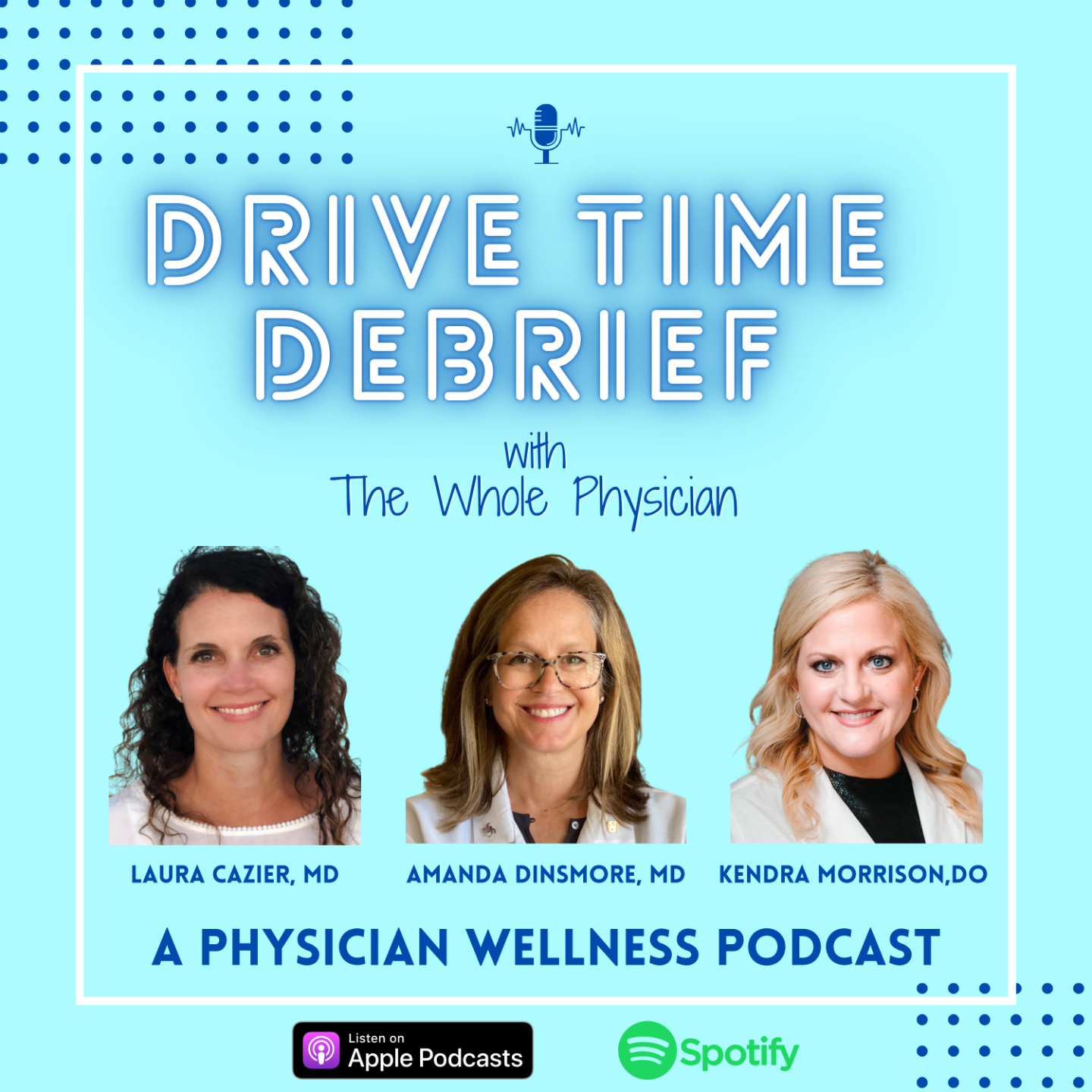
Laura Cazier, MD; Amanda Dinsmore, MD; Kendra Morrison, DO
SERIES
The Whole Physician
PUBLISHER
American Academy of Emergency Medicine (AAEM)