Tony Grandelis edited
===
[00:00:00]
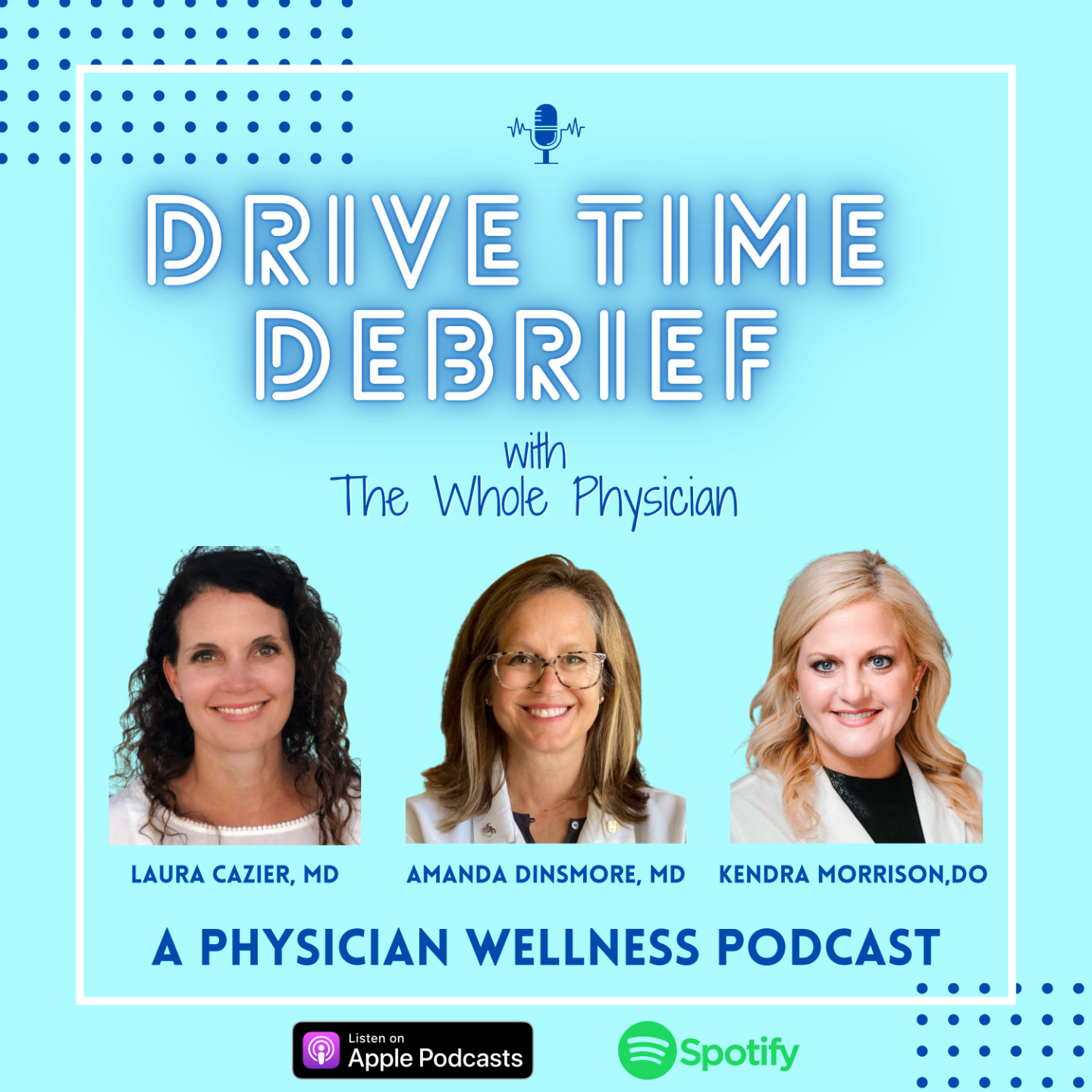
riverside_edit_03 - tony grandelis, md_the_whole physician: Hey, guys. Welcome back to the podcast. I'm Amanda. I'm Laura. And I'm Kendra. And today we are so excited to welcome Dr. Anthony, or Tony, Grandeles. He's a fellowship-trained OBGYN hospitalist. He's a medical educator, a physician who is in long-term recovery, and his work sits at the intersection of clinical excellence and systems transformation.
as the founder of Recovering Healthcare and the author of The Recovery Prescription: What Addiction Can Teach Us About Healing a Broken Healthcare System, he applies 12 recovery-derived principles, things like honesty, humility, surrender, gratitude, and more, to a medical system that he argues is not just broken, but spiritually sick.
Boom. I, I feel that in my soul. Based in Brooklyn, New York, he consults for healthcare organizations, speaks at national conferences, and serves as an expert witness in complex OBGYN cases. His story offers physicians [00:01:00] permission to tell the truth about their own struggles, and his framework gives them something concrete to do with that truth Thank you, Dr. Tony, for joining us. Thanks for having me. Yeah, we're excited to have you on. We think that this episode is going to blow open the idea of vulnerability, and we love that because we know that typically our toxic medical situation does not invite the guest of vulnerability.
And so we love that you're here with us, and that you have the courage and bravery to tell us about what your story meant to you, and also coming out on the other side, what it can mean to all of us. And so we'll start by talking about your book, "The Recovery Prescription." It argues that healthcare's crisis isn't just financial, and it's certainly not structural, but it's more closely aligned with the spiritual.
So what led you to that diagnosis? Yeah, good question. Again, thanks for having me today. I'm really happy to be [00:02:00] here. I... You know, one of my identities, of course, is as an OBGYN. I've been practicing as an OB in New York for about four years now. And my other main identity is a person in recovery from drugs and alcohol.
And for a long time those identities were very hard for me to, to bring together. And as I went farther into the recovery spaces, I realized that addiction is mainly a dise- like, a spiritual disease. It's a essentially disconnection from oneself, from meaning, from purpose in life, from others around you.
And one of the, you know, the main ingredients to recovering from addiction is connection, and whether that's connection to other people or connection back to purpose or meaning. And so as I was getting better and recovering myself from drugs and alcohol, I was realizing that I, I'm seeing so many of my mentors, like, really smart people, really brilliant people well-educated people who are burning out.
And everything that we seem to be throwing at this problem doesn't really get at the core problem. And [00:03:00] I-- So I think that the core problem, a l- the same as addiction, is spiritual. People are, are disconnecting from the reason that they went into medicine in the first place. Yeah, so that's kind of how I came to that conclusion.
Yeah, I love that. That is something that I think probably even further augmented by this tech age. You know, we don't have to connect really anymore- Mm-hmm ... because we can find it in something that's technological, right? Where we- Yep ... where I'm sure some of those mentors and some of those people you looked up to didn't have that.
And so probably they're also grieving the fact that that connection is lost because they trained under really connecting with the patient, that human factor, and I feel like we're getting further and further away from that, so I couldn't agree more. You're open about being a physician in long-term recovery from substances, right?
We see patients all the time that have substance use disorder. But how does that change the way you practice medicine? It's like being in recovery like has [00:04:00] shaped like-- It, it shapes everything about how I show up in the hospital these days. And it's funny because it's like a lot of these things that I've learned in recovery, like I never learned in medical school or in residency.
But since I, I, I first entered in recovery back in two thousand and nineteen when I was a resident and I was just like so blown away by the things that I was like having the opportunity to learn every day. And so like I, I, I say to myself like, "I'm not a good doctor despite my addiction, like I'm a good doctor because of my recovery," because I feel like I've learned so many really cool things in recovery.
Like I'm able to show up with more integrity in my practice. I practice with more humility. I am able to create safer environments for my patients, my trainees, my colleagues. I have a better like appreciation for like the mysteries between life and death, which I think is something that we don't think about a lot in medicine.
I have a better sense of... one of the biggest things in recovery is like learning what you can control and what you cannot control, and like I take that into medicine all the time because it's a field where like we are constantly grasping at control for things that [00:05:00] like we really have no business trying to control.
and also I think it's just allowed me to show up with more honesty. I'm able-- Like being able to share my story with my trainees and my colleagues and even patients sometimes like really breaks down barriers for learning and for healing, I think.
Yeah. Wow, that's incredible. It sounds too like the-- even going through recovery, you noticed how you were going to come out on the other side. That had to give you that sense of purpose. I'm going through a painful situation, but behind this pain is gonna be great purpose. 'Cause you were even noticing as you went through recovery, wow, look at all this that I'm learning.
This is what I'm gonna take with me. And now you show up probably better than most of us who, if we haven't gone through recovery or some kind of program like that, wouldn't have any idea. I feel-- I mean, I feel very grateful. I've had the opportunity to, to step away from medicine twice in my life now, and it's I, I, I can't like-- I'm, I'm nothing but grateful for those opportunities, and I don't think that people get that opportunity.
[00:06:00] And you know, I, I went through it, you know, I went through a, a pretty difficult time to get that that space from medicine. But at the same time it allowed me to really kind of refocus on what was important to me and what matters to me, at least as a, a medical professional. Yeah.
That's outstanding. So you've talked before about the danger of the word resilience in medical training, which is a different perspective, but tell us more about that. Yeah, I mean, I, I work um, also in medical education. I'm one of the associate program directors where I work and, you know, as I, I read residency applications and we talk about them resilience is such a buzzword.
And it is something that we uphold a virtue in medicine and medical training. And again comparing it to my life in addiction resilience is often the very things that-- the very thing that kills us. We show up long after we've stopped coping. We're surviving fires that are burning our lives to the ground un-until we don't.
And, and, and we all know, you know, addicts who, who overdose and die because they just keep pushing through. And so, if I compare that then to, to healthcare it's like-- The [00:07:00] pr- I think that, you know, when we hold-- when resilience becomes a benchmark for how we measure success it really takes the pressure off of the system and puts it onto the indivi-individual.
And so it's for me when I hear people talk about, like, how resilience, like it's, it's really-- not that resilience is bad, but it just I have to pause and think differently about it because resilience has meant such a different thing for me over the years.
I hear that and I-- it almost sometimes feels like victim blaming in a, in an abusive system when there's things wrong in the system and, the doctors are told over and over again to just be more resilient. Yeah. And I think, you know, it's it says that, like, when...
It, it-- expectation is that, like, when you're dealing with impossible working conditions the answer is to push through try harder. Like, when probably the real answer should be, like, to stop, ask for help. Yeah, because when we are driven to push harder and push harder and use up our reserves, then we, we turn to things like substances and, and [00:08:00] our phones and any other number of things to, to help us get through.
So I just wanna say how much I appreciate you and your courage in sharing your experience. I'm an adult child of an alcoholic. my dad died of alcoholism that was all rife throughout my childhood. And it actually led to my own burnout experience working in the emergency department.
I found that working with so many people with substance use disorder who didn't want any help was extremely difficult for me because, I wanted that control. I spent that-- I spent my whole childhood wishing my dad would be different and that he would go into recovery, and he never did.
And so when you tell the story about how you can be different, I'm like, "Man, if I had Dr. Tony, Tony with me in the ER, he could've..." It just was so hard to never even see an example of what recovery looks like, and it just felt so hopeless. So, um, and I know that there's [00:09:00] a, a lot of doctors out there hiding, um, problems that they're having with substances, and so I know that your courage is giving them more courage.
So thank you so much for that. Mm-hmm. Tell us, tell us what your experience was like asking for help, uh, within healthcare institutions. What, what exactly did it look like? I've had two very different experiences. So I'll tell you about the first time. I was a resident the first time, and I, I was really scared.
Things were, like, k- kind of falling apart in my personal life. And my mother she recognized what was going on with me. Addiction is also in my family, so I think she saw the signs. And she, I did not have the courage to ask for help myself. I was scared, just you know, like many healthcare professionals are.
I was worried about what does this mean for my training? Will I be able to finish? Will I be, kind of like, will I be able to practice medicine? What will-- what is the impact on my license and the future? And and so I ultimately was not able to ask, and my mother kind of gave me the push I [00:10:00] needed.
And she, she essentially got me signed up with a physician health committee right o- right out the door. So I've been working with a physician health committee ever since that time. And, and what that did, it was essentially the committee took me out of work and had me go to treatment.
And, and then I came back to, to residency training about three months later, and I had the most wonderful experience the best return to work. I couldn't have asked for a better experience. People were very supportive and, and really they, they helped me to balance my two lives in recovery and also in medicine.
And so I was able to finish training on time, and I was thriving at the end of it. And so, that I, I really appreciate that experience, and it, it, you know, I, I didn't think that there... i, I've heard about people having negative experiences with this before, and I was like, "Wow," I was like, "I can't believe that happened," because I had such a good experience.
Fast-forward several years later I was-- I had moved to New York and, and again some personal challenges were thrown my way and and I had not really, I had moved my identity back to mostly medicine as I started as an attending, 'cause that was my [00:11:00] sole focus.
I said yes to everything, and I kind of, you know, let my recovery slip to the side a little bit, and I had a relapse as part of my story. And, you know, I, I've been fairly open about my recovery ever since I, I first entered recovery. And, and so when I left to get-- I, I, I essentially came forward as "I need help.
I need to take some time again." And I I, I told people what I was, like, taking leave for. I told the residents that I worked with that I was leaving for the disease of addiction. I told my coworkers. I was a little I, I did some stuff on social media for advocacy, and the response that I got this time was, like, the exact, like, opposite.
People stopped responding to me at work. They stopped following me on social media. I was told to undergo professionalism remediation as part of my advocacy and outspokenness. And And so I I was kind of shocked, and I essentially, I, I decided not to go back to work at that place.
And and so I've really experienced both ways. I've experienced a really great return to work, and I've also experienced the stigma that a lot of people face. And that's kind of like [00:12:00] where, where the brand was born out of was that last experience. I'm so sorry that you had that experience.
That sounds like it was a nightmare. Thanks. Yeah. It was, it was hard. So tell us about the, the recovery healthcare framework. How did, how did it develop? Yeah. So it's, it developed out of that last experience. I had taken you know, about six months off of work, and I was reflecting on what I had gone through at, at that institution.
And that was the first time that I actually really realized that my job probably-- Well, I never thought my job had anything to do with my addiction, to be honest. I, I was always like, "I love my job. I love working in medicine. I love work." And it wasn't until that time where I was like, "Wow, I think my job actually probably has everything to do with my addiction."
Really? For real. And it's funny because the denial was like it was there. And, a-and it took me it took me some real, like, processing to understand that there are so many things about my job that, that play into my mental health. And and I was noticing again as I was, like, practicing all these principles of [00:13:00] recovery, like everything that I was doing, like literally every day in like support meetings I was realizing that these are literally things that medicine is missing.
And so I, I was thinking what would it be like to, to take the framework that has helped millions and millions of people recover and bring it into a system that I think is so sick and broken. So that's kind of where the brand came from. Oh my gosh. I am so excited about this. So basically the 12 steps for the medical system.
Yep. Which I, I of-often talk about how it's a narcissistic system of abuse. So I, I'm really, really excited to hear how, how this, how this goes. So if you could redesign healthcare so physicians could flourish instead of just survive, what, what do you think would have to change first? It's a hard question.
Y- you know, I talk in one of the, the chapters in my book, I talk a lot about the, the principle of safety and just creating like safe spaces. And the idea for [00:14:00] it came from we talk a lot about trauma-informed care these days in medicine, and it's like incredibly important. What we don't do is we don't talk about trauma-informed care for the provider.
Yeah. And as I started like think of it- thinking of it that way, I was like, "This is like really what needs to change." Because if we think about like trauma, like we experience trauma every day in medicine, like literally every day, every minute of every day, like death, illness, suffering, injustice.
Add on that, add on top of that like high-stakes decision-making, which is a form of trauma in and of itself, like sleep deprivation like all these things, like just like they are adding like trauma on top of trauma on top of trauma, and we're given like no room to like really process it, let alone like even recognize that it's trauma in and of itself.
And so I think that in order to, to start to change healthcare, like we have to start-- I, I, I essentially believe that we cannot create safe environments for patients out of unsafe ones for providers. It like just doesn't make any sense to me. And so [00:15:00] like I think the first thing that needs to happen is to ask like at every level of like our institutions, are we designing systems that mirror like healing or ones that mirror trauma?
And right now the answer is like trauma. Yeah ... and so I think once we start asking that question, we can start to figure out ways to, to help adj- like move the, the meter from trauma to healing. Yeah. Wow. Preach it. Yeah. Oh my gosh. Totally. Yeah. Mm-hmm. Thank you for being so vulnerable. I-- there are things that happen to us in our lives I, I feel like that we would never wish to happen, we wouldn't wish on anyone else, but sometimes you can take those things and end up helping other people because of your testimony about it.
And I honestly feel like you're going to reach somebody listening who has been on the fence of "What do I do?" I, I, you know, being too scared to say anything or ask for help. So for a physician listening right now who maybe suspects they're carrying more than just their grit and resilience can carry [00:16:00] them through, what is one recovery principle that they could start applying today?
I think that-- I think I'll answer this question two ways. I think for, for people who are, are, are just i-in general struggling within healthcare, I think the principle that is most helpful to start with is probably integrity. We, we talk a lot about moral injury and, you know, that being, like, the, the difference between our values and our actions and, and we're pulled out of integrity in relentless ways every single day just by the system that we exist in.
And so, with, with my trainees, like the residents that I work with, like the first exercise that we do is essentially just sit down and write our values. I remember when I entered recovery they asked me to do this, and I was like, I was like, "What?" I was like, "I don't know."
I was like, "I don't know what my values are." I had been raised with values, but I never had been asked to put them on paper and I feel like that's something that's so important to do as healthcare professionals. So, that's, like, where I start often because then we can see okay, this is actually, like what matters to me and this is w-why I went into [00:17:00] medicine.
And just by noticing, like, those you can start to shift your actions every day. You know, it's like something as simple as being more present with patients. We have these communication systems that are pulling us out of rooms, like, all the time. So just even recognizing that that's happening and that's pulling me out of my values then I can just slowly shift, like, how I start to practice.
Even documentation we learn to document ways that protect us rather than say what actually happens. And so, I f- I, I think more about, like, how I document these days and and I, I think more about you know, patient autonomy. I think about it in different ways just based on some of the values that I have.
The other way that I was gonna answer that question is for people who really think they're struggling esp- like, particularly with substances or other mental health things. I had no idea that help existed. And so I think I, I think that hopefully this this podcast can help people at least recognize that help does exist for healthcare professionals.
There are physician health programs in every state. They all operate a little differently. Some are more strict than others, but ultimately they function the same way and they, they [00:18:00] exist literally to help healthcare professionals recover and get back to a meaningful life in medicine.
Despite them seeming scary and whatnot that's that's their function and I'm proof that they that they work. I've never really had a problem, like with my license or any medical boards or anything like that. And that's mainly because, like- I like came forward like before like there was really like any true problem.
Which is hard for people to do because I think that they like don't understand that, that there's a world like where they can get better and like, and return to medicine, so. Wow. Thank you so much. I really appreciate you coming on and talking about this. Where can our listeners find more about you?
Where do they find your book and, and how do they find the recovering healthcare framework? Yeah, so the book is The Recovery Prescription. It's on Amazon. And then my website is my name, anthonygrandellasmuchd.com. It has all my contact information on there, including email so people can reach out to me there.
Instagram, I'm also Anthony Grandells MD, and I'm on [00:19:00] LinkedIn as well, so people can reach me on, on those social sites. And I'm happy to, to chat with anybody about like any of these principles or if people are concerned about themselves or, or, or colleagues, I'm happy to chat about all of that. Yeah.
I, I love that. We're, we will include all of those links in the show notes. So any last thoughts before we close? I thank you again for having me. I think this is such like a wonderful podcast and it's really helping to, to bring light to some really important topics in medicine, and I'm just really grateful you had me on today.
Thank you so much. Our pleasure. Thanks. Yeah, thank you so much Dr. Tony. I know that, you know, we do talk a lot about things that need to be talked about and maybe normalized, but it does take an ounce of bravery, but I really feel like you fully shed a pound of courage and boldness on the show today, and we just wanna honor you for that and for the work that you've done coming, you know, outside or, or on the other side of both not over-- not only recovery, but returning to medicine [00:20:00] in, in within your own self-integrity, and then leaving that legacy for the next generation of physicians to maybe, just maybe, start off on the right foot instead of having to backtrack and be like, "Where did we get lost?
Where-- How did I get here," right? And so thank you so much for just being a pioneer in that and wanting to impact that next generation. It-- Your ripple will go far, and we see that, and we honor you for that. Thank you very much. Thanks. And that's it for today's episode, friends. If you found this conversation helpful, how could you not?
The best way to support us is to subscribe. So click that button now, leave us a rating and a review, and it helps other physicians find the podcast, and it moves us up on the list. And if you do leave a review, take a quick screenshot and email it to [email protected], and we will send you a free e-book on emotional regulation, which is one of our most requested impactful topics.
And don't forget to follow us on the [00:21:00] socials, @thewholephysician. We love connecting with you there. And thank you for spending time with us today. Until next time, you are whole, you are a gift to medicine, and the work you do matters.